

Americans receive more packages than ever before as e-commerce continues to grow. Major carriers like FedEx and UPS help move an extraordinary volume of parcels, and U.S. shipments exceeded 21 billion in 2023, according to the Pitney Bowes Parcel Shipping Index. While the convenience is clear, what happens when those packages never make it into recipients’ hands?
During major shopping events like Amazon Prime Day promotions and the year-end holidays, deliveries surge. Independent retail trackers reported U.S. online holiday sales grew year over year in 2024, reinforcing the seasonal spike in doorstep parcels — and porch-piracy risk. See Mastercard SpendingPulse for holiday trends.
Inevitably, some of those packages will never make it across the threshold – they’ll be stolen right off the front porch. Package theft has been an ongoing problem in a world where online shopping has become routine, according to Daniel Levine, director of the Avant-Guide Institute and publisher of WikiTrend.org. “These thefts are crimes of opportunity,” Levine said, and security cameras give victims the chance to out “porch pirates.” Recent national surveys estimate roughly 25%–35% of U.S. adults experienced a package theft in the past 12 months, and around 40%–50% say they have ever had a package stolen, based on findings from Security.org and SafeWise.
Recent nationwide surveys continue to find high exposure: approximately one-quarter to one-third of U.S. adults report a package theft within the past year, with repeat incidents common; lifetime experience typically falls in the 40%–50% range (Security.org; SafeWise). Younger, higher-volume online shoppers tend to face greater risk, reflecting greater exposure, and younger adults often shop online more frequently.

It’s possible porch pirating is on Amazon’s radar as well as its customers’. In 2015, the company filed a patent for a drone that could simultaneously deliver packages and monitor homes. The patent, which became public in June 2019, outlines ways the drone could surveill homes, such as detecting “that a garage door was left open during the day, a broken window, a detection of graffiti, or a fire.” However, as of 2025, Amazon has not launched a consumer “surveillance-as-a-service” drone product; current Prime Air materials emphasize delivery, safety, and privacy safeguards such as geofencing and data minimization (Amazon Prime Air: Safety and privacy).
Already, the company has introduced PrimeAir, a “future delivery system from Amazon designed to safely get packages to customers in 30 minutes or less using unmanned aerial vehicles, also called drones.” With key regulatory momentum, including FAA approval to fly beyond visual line of sight without on-the-ground visual observers, and announced expansion to the Phoenix metro area plus plans for the UK and Italy (pending local approvals), Amazon is positioning Prime Air for limited commercial service while scale and economics continue to mature (Reuters; Reuters).
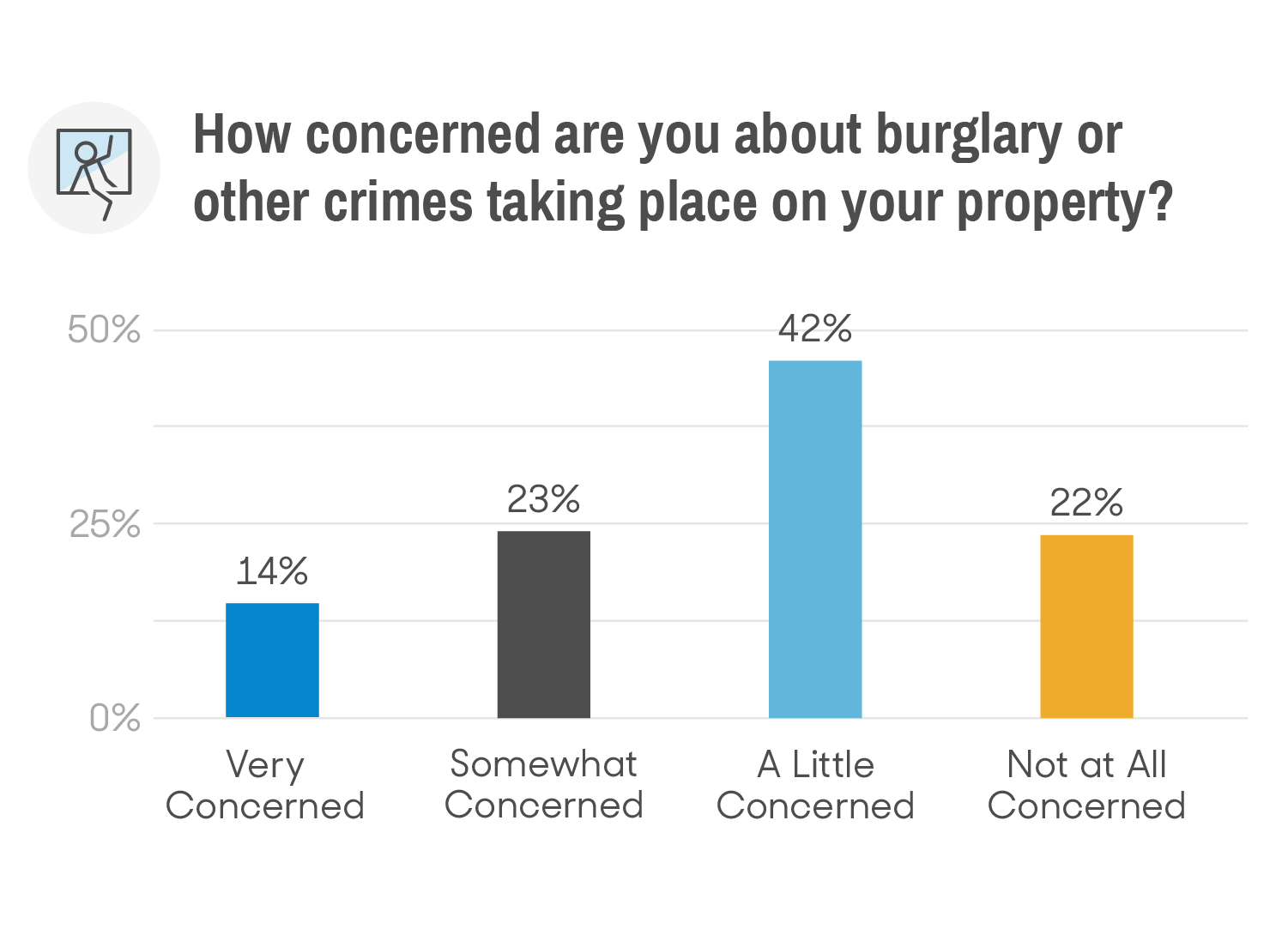
The popularity of online shopping has given rise to concerns over package theft, but broader concern over home security goes beyond just those worried about packages being stolen from the front porch. The survey found 78% of U.S. adults are at least “a little concerned” about being burglarized or other crimes taking place on their property. Of those Americans, 14% are very concerned, 23% are somewhat concerned, and 42% are a little concerned.
Despite the prevalence of package theft and general worry about burglary and other crime, most U.S. adults don’t have home security systems. Only 22% of U.S. adults said they currently own a home security system, and 59% said they have never owned one.

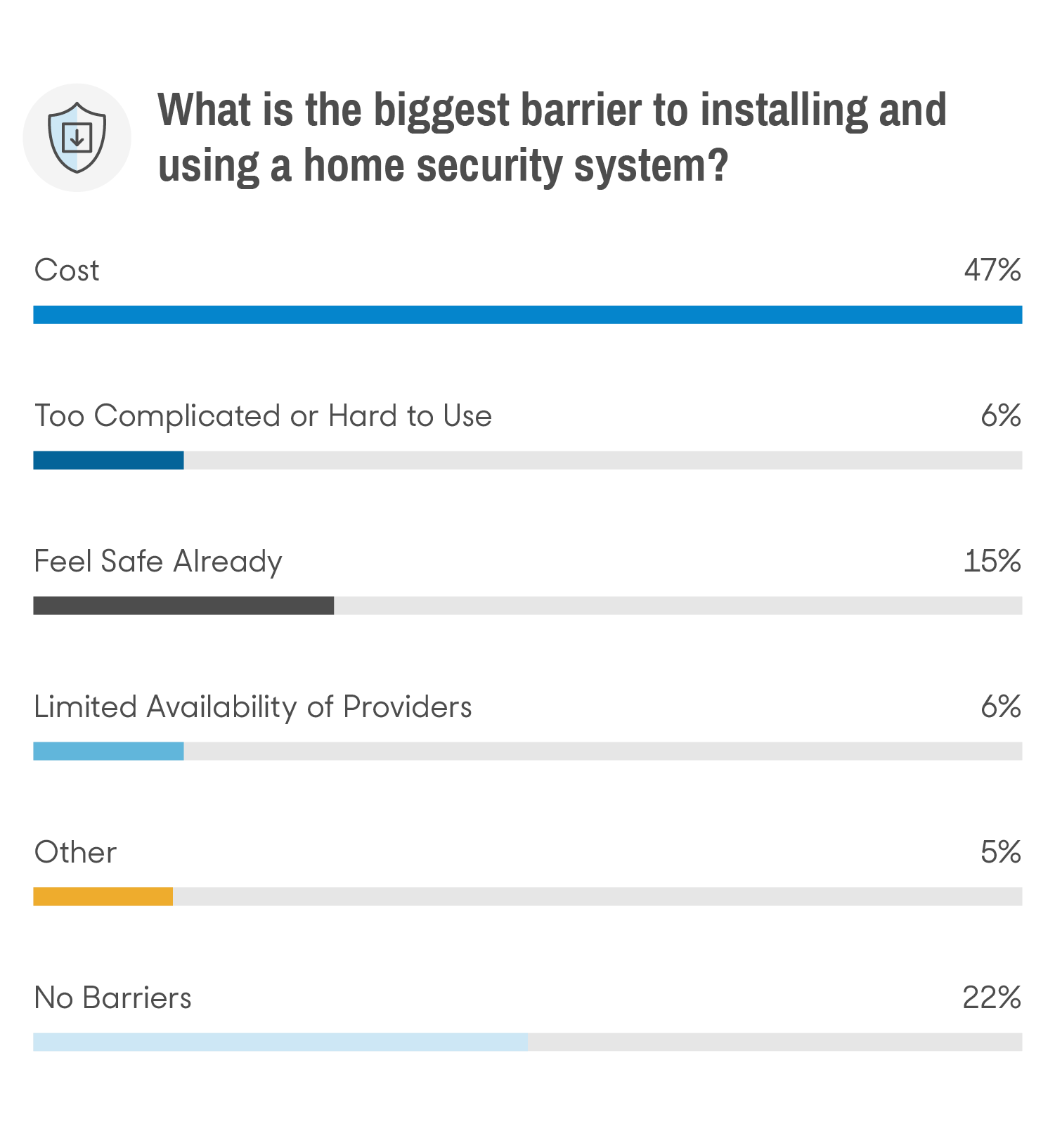
So why are there so many people who are aware and concerned about theft, but still don’t own security systems? Almost half (46%) of U.S. adults said the main barrier to installing and maintaining a home security system was cost. For those with an income of less than $40,000, that percentage rose to 53%. This makes sense, since the average monthly starting price of the 10 best home security systems is nearly $300 a year, or about 1% of a $30,000 salary.
Amazon’s drone technology could provide a more cost-effective home security option. The patent describes a new “surveillance as a service” model that users could subscribe to. It could “provide various parameters for the surveillance, such as a surveillance tier, frequency, monitoring type (e.g., sensors), and alerts.” These options could potentially allow users to customize a plan that fits their needs and budget.
Amazon seems to have an interest in being involved in nearly every part of the customer experience. The company is staying involved in the purchasing process long after you click “Place your order.” Amazon declined to comment on surveillance and security, but moves like the drone patent, PrimeAir, and already-implemented features like Amazon Lockers and In-Car Delivery all point toward the company’s interest in secure delivery. Given the perceived cost barrier to traditional home-security systems, it makes sense Amazon would want to tap into its large market of loyal customers to implement a millennial-friendly home security system.
But in the meantime, there are inexpensive, easy steps you can take to 10 best home security systems (no glitter bombs necessary).
Other interesting findings
- 23% of U.S. adults are “somewhat concerned” and 14% are “very concerned” about being burglarized
- U.S. adults from the south were the most likely to have a home security system (27%), while those in the Midwest were the most likely to not have a system (73%).
- Cost was a bigger barrier to younger U.S. adults (50% for age 18-34) and those with lower income: 53% when income is less than $40,000 and 49% when income is between $40,000-$80,000
- 33% of U.S. adults said that video surveillance was the most important feature of a home security system. This varied by race; 30% of white people and 45% of black people chose video surveillance as their top choice.
Methodology
Reviews.com commissioned YouGov Plc to conduct the survey. All figures, unless otherwise stated, are from YouGov Plc. Total sample size was 1,237 adults. Fieldwork was undertaken June 24-25. The survey was carried out online and meets rigorous quality standards. It employed a non-probablility-based sample using both quotas upfront during collection and then a weighting scheme on the back end designed and proven to provide nationally representative results.
Image: GettyImages/Jorge Villalba


