

The streaming wars have settled into a hits-and-ads reality. Usage has stabilized with streaming accounting for roughly the low‑40% share of U.S. TV time, led by YouTube and Netflix on the TV screen per Nielsen’s The Gauge. At the same time, advertising has become the default business model across majors—Netflix’s ad plan reached about 40 million global monthly active users, and in ad markets more than 40% of new sign‑ups choose the ad tier (Netflix Upfront); Amazon made ads the default in Prime Video with an ad‑free upsell in the U.S. (policy details). U.S. CTV ad spending was estimated around $30.10 billion in 2024, underscoring the pivot to ad‑supported growth (Insider Intelligence). NBCUniversal’s CES stage message that quality will matter more than sheer volume maps to this landscape, where tentpoles and premium live events drive outsized engagement and monetization.

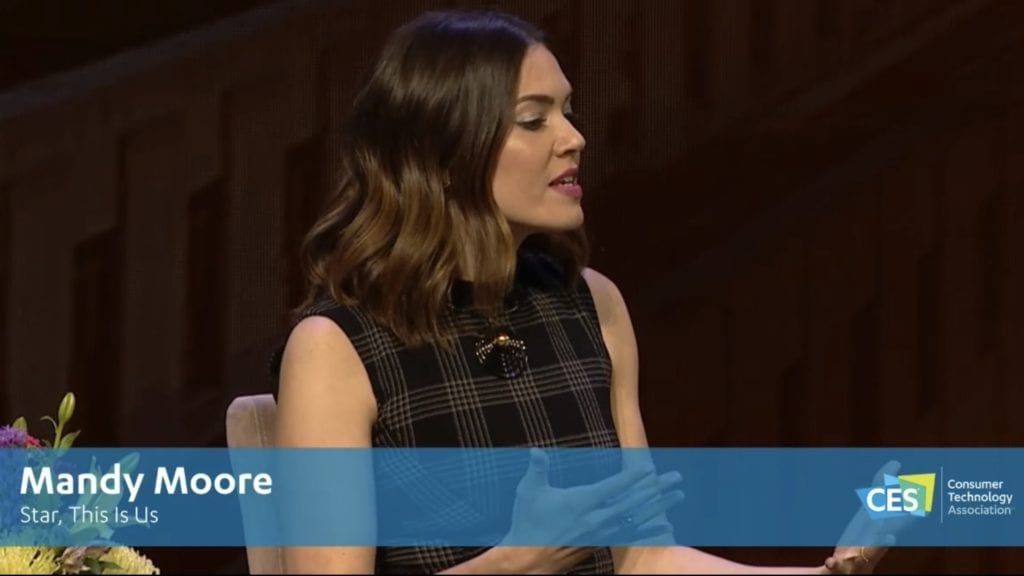
The session opened with Today West Coast Anchor Natalie Morales and a panel of NBCUniversal talent including This Is Us star Mandy Moore, Terry Crews from Brooklyn Nine-Nine, Kate del Castillo from La Reina del Sur, and Songland‘s Ester Dean. The industry throughline since: fewer, bigger bets. Independent analyses show original commissioning volumes fell to multi‑year lows as streamers prioritized profitability over title count (Ampere Analysis). Eventized moments—especially sports—became major acquisition and ARPU engines, exemplified by Peacock’s exclusive NFL Wild Card game that set a U.S. streaming record with a 23.0 million average audience (NBC Sports) and by new aggregation plays like the Disney/ESPN‑Fox‑WBD JV, branded Venu Sports.
Choice keeps expanding across formats and devices. Consumers spend over five hours per day in mobile apps in top markets, with short‑form video among the largest contributors (data.ai State of Mobile 2025). On the TV screen, streaming holds about four in ten minutes of usage in 2025, with YouTube often the top individual app by share and Netflix typically next (Nielsen – The Gauge). People mix short‑form on phones with longer sessions and live events on CTV at night; ad‑supported options and FAST channels continue to grow as price‑value tradeoffs sharpen (Comscore State of Streaming 2025; Deloitte Digital Media Trends 2025). For NBCU’s ad team, acknowledging these behaviors means pairing content across lengths—from a Saturday Night Live monologue “snack” to full episodes—with clearer cross‑platform measurement like Nielsen ONE Ads.
“The future is all about personalization” now translates into ad‑supported value with careful experience design. Platforms at scale have normalized ad tiers (Netflix’s 40M MAUs; Prime Video’s default ads at launch with a paid ad‑free option in the U.S.) (Netflix; Amazon policy). Best practice emphasizes contextual alignment, light ad loads, and frequency control—delivering premium CTV completion rates in the mid‑to‑high 90s and strong ad receptivity when the fit is clear (FreeWheel VMR; Kantar Media Reactions). With U.S. CTV ad spend around $30.10B in 2024 (Insider Intelligence), incremental growth in 2025 increasingly depends on identity‑safe targeting, deduplicated measurement, and live‑event inventory quality rather than just adding subscribers (Nielsen ONE Ads).
Moore underscored that creation barriers keep dropping—a theme that has only accelerated. Today, creators routinely employ generative and mobile‑native tools to compress pre‑production and post: text‑to‑video models such as OpenAI Sora and Google Veo for rapid previs and B‑roll; high‑fidelity image generation with Imagen 3 for thumbnails and product shots; Final Cut Pro for iPad 2 with Live Multicam capture across up to four devices; on‑device assistants via Apple Intelligence; and platform‑native suites like TikTok Symphony for scripting and optimization. Governance is entering the workflow too, with labeling policies and watermarking such as YouTube’s disclosure requirements and SynthID.
Regardless of tools or where viewers watch, strong narratives remain the core of great experiences. Research consistently finds creative quality is the biggest driver of advertising outcomes, and distinctive, character‑led storytelling with clear arcs and fluent brand assets improves memory and effectiveness (Nielsen Annual Marketing Report; Kantar Creative Effectiveness; WARC Anatomy of Effectiveness). In practice, that means opening strong to earn attention, building episodic arcs that can be atomized into shorts and clips, and using consistent sonic/visual cues across CTV and mobile.
Morales’ “quality over quantity” theme has become industry orthodoxy. Analyses show commissioning volumes tightened materially in 2024 and remained disciplined into 2025 (Ampere), even as ad‑supported usage and FAST viewing expanded (Comscore 2025). Operators are trading some net‑add velocity for better unit economics: Disney reported its Entertainment DTC operating income turned positive (Disney FY2025 Q2); Max emphasized DTC profitability in 2025 updates (WBD IR); and Netflix continues to concentrate engagement in top titles per its semiannual reporting (What We Watched). For consumers, value is increasingly found in bundles and ad tiers (Deloitte 2025), reframing earlier debates about Netflix’s aggressive content expansion around a hits‑driven, ad‑supported marketplace.
The company didn’t use this stage for new Peacock announcements, but the service’s strategy and performance are clearer with recent data. Peacock reached 32 million paid subscribers in Q2 2024; quarterly revenue was about $1.0 billion (up roughly 66% year over year) with an adjusted EBITDA loss of approximately $348 million—narrowing losses amid stronger monetization (Comcast Q2 2024). Pricing moved higher in July 2024 (Premium to $7.99; Premium Plus to $13.99) to lift ARPU (pricing). Peacock served as the primary streaming home for the Paris Olympics, driving multi‑week engagement and advertiser demand (Comcast Q3 2024). Its sports‑and‑tentpole approach continues to deliver spikes like the record 23.0 million average audience for the exclusive NFL Wild Card game (NBC Sports), while a curated library—next‑day NBC/Bravo, Universal films, and enduring hits such as The Office joins Peacock—supports retention between tentpoles. That portfolio is monetized primarily through ads, aligning Peacock with the broader shift to hybrid AVOD/SVOD models.
Net‑net: execution now hinges on monetization depth and retention. Streaming holds about 40% of U.S. TV usage (Nielsen), mobile attention exceeds five hours per day (data.ai), weekly podcast listening touches roughly two in five Americans 12+ (Edison Research), and younger audiences increasingly consume video‑led news on TikTok, YouTube, and Instagram (Reuters Institute 2025). With CTV ad spend around $30B and ad tiers ubiquitous, 2025 outcomes for Peacock and peers will be shaped by frequency control and identity‑safe measurement (Nielsen ONE Ads), FAST adoption and bundles that temper churn (Comscore 2025; Deloitte 2025), and the evolving sports landscape as Venu Sports comes online.