


We recommend products and services based on unbiased research from our editorial team. We make money via affiliate links, which means if you click a link on our site, we may earn a commission. Any commissions we receive do not affect our recommendations; if you want to know more about how that works, read more.
The Best Smart Smoke and Carbon Monoxide Detectors
Smart smoke and carbon monoxide detectors add app alerts, self-testing, and easier maintenance to the life-safety basics. Why that matters: The National Fire Protection Association reports the death rate in reported home fires is 55% lower when working smoke alarms are present, and power problems — missing/disconnected or dead batteries — account for about 43% of smoke alarm failures. Smart models help by monitoring battery status, running test routines, and notifying your phone if something’s wrong.
- Mobile notifications warn you about fire and carbon monoxide (CO) danger even when you’re away from home, so you can act quickly
- Many smart alarms announce the hazard type and location and can interconnect (physically or via brand/app ecosystems) for whole‑home alerts
- Automatic self‑testing and low‑battery/end‑of‑life alerts reduce the risk of silent failures
- App “hush” and guided tests make maintenance safer and faster than climbing a ladder
Did you know? Nearly three in five home fire fatalities occur where smoke alarms were missing or didn’t operate. Choosing alarms that self‑test and send low‑battery alerts can directly address the top failure causes.
Analysis paralysis? Subscribe to our newsletter.

Nice! Thanks for subscribing. Check your email to confirm.
The 2 Best Smart Smoke and Carbon Monoxide Detectors
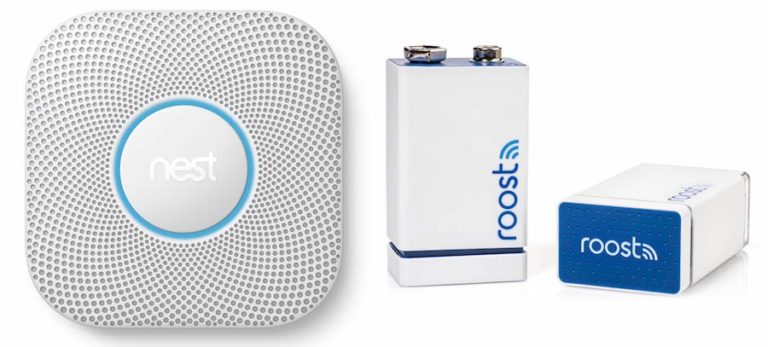
- Nest Protect — Best Smart Detector
- Roost Smart Battery — Best Budget Smart Detector
How We Chose the Best Smart Smoke and CO Detectors
In 2025, a handful of established lines dominate smart smoke/CO options in North America: Google Nest Protect, Kidde’s HomeSafe Wi‑Fi series, and First Alert’s Onelink (Wi‑Fi) and Z‑Wave models. These are the primary choices highlighted across editorial roundups (TechHive; Wirecutter). Europe sees strong adoption of the Netatmo Smart Smoke Alarm (smoke‑only).
Connectivity and ecosystem fit are key buying decisions: Wi‑Fi (brand app + Google/Alexa/Apple support varies) versus hub‑based Z‑Wave (for Ring Alarm/SmartThings). Matter is advancing, but as of Matter 1.3 there’s no native smoke/CO alarm device type, so today’s alarms rely on proprietary apps or specific ecosystems rather than universal Matter control. We prioritized UL‑listed combo units (UL 217 for smoke; UL 2034 for CO), long‑life power, and reliable app features like remote hush and guided self‑tests.
Earlier startup efforts underscore the importance of long‑term support for life‑safety gear: the 2014 crowdfunded Birdi never shipped meaningfully, and Halo Smart Labs shut down in 2018. We focused on brands with proven certification, service, and ecosystem integration.
Detects smoke and carbon monoxide
We focused on combo units that detect both hazards with dedicated sensors (photoelectric for smoke; electrochemical for CO) and carry U.S. listings for UL 217 (smoke) and UL 2034 (CO). A single smart unit simplifies maintenance while ensuring both threats trigger mobile alerts and voice announcements (TechHive).
Safety and performance certified
Choose alarms evaluated to the latest editions of UL 217 and UL 268 (smoke) and UL 2034 (CO). The UL 217/268 8th Edition updates broaden fire tests and strengthen nuisance‑alarm immunity — key improvements that manufacturers incorporated into current models. Verified listings from a nationally recognized testing lab (UL, ETL/Intertek, CSA) should be visible on the alarm or its datasheet.
Performs self checks
The U.S. Fire Administration recommends monthly testing. NFPA analyses show smoke alarms in reported fires fail most often due to power issues — about 43% of failures involve missing/disconnected or dead batteries. Smart alarms automate battery checks and guided siren tests, and they notify your phone when attention is needed.
Did you know? Power source problems are the top reason smoke alarms fail to operate in home fires. Sealed 10‑year batteries or hardwiring plus regular tests markedly improve reliability.
Models like Nest Protect provide app‑guided Safety Checkups and low‑battery/end‑of‑life alerts so you’re less likely to be caught off‑guard by a non‑working alarm (Google).
Nest Protect

Pros
Multi-purpose detector
Battery or hardwired option
Automatic self-testing
Broad smart capabilities
Cons
Not Alexa or Siri enabled

Why we chose it
Multi-purpose detector
The Nest Protect’s feature set remains a benchmark: Split‑Spectrum smoke sensing, electrochemical CO detection, voice alerts that name the room and hazard, mobile notifications, early Heads‑Up warnings, Pathlight night light, and guided Safety Checkup self‑tests (product page).
Battery or hardwired option
Nest Protect ships as either a sealed long‑life battery unit or a hardwired version with battery backup, so it fits homes with or without existing wiring. Hardwired models can tie into traditional interconnect circuits; battery versions simplify retrofit installs (Google).
Automatic self-testing
Through Safety Checkup in the app, Nest performs speaker, horn, and battery checks and reports results to your phone. If anything needs attention, you’ll get a notification so you can resolve issues promptly (Google).
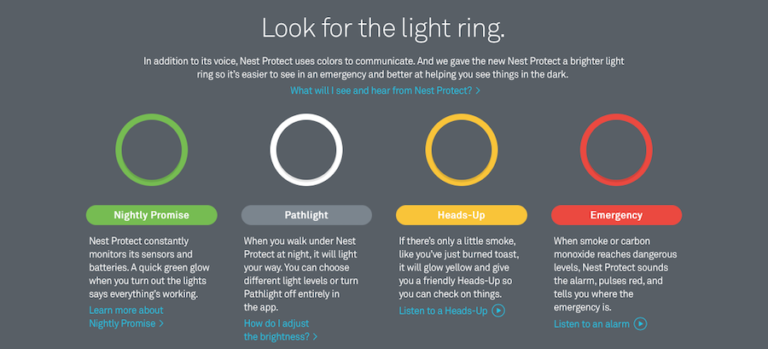
Broad smart capabilities
Nest Protect integrates with the Google Home app for alerts, testing, and settings. There’s no native Apple Home or Alexa control. Also note that as of Matter 1.3, smoke/CO alarms are not a supported Matter device type, so cross‑platform control relies on brand apps and supported ecosystem features today (Google Home developer guidance).
Nest Protect also works with the IFTTT (“If This, Then That”) app, which lets it connect to smart products outside the Nest or “works with Nest” family more efficiently. For example: If you use smart light bulbs and locks, you could set up a command through IFTTT that turns on all the lights and unlocks doors when the Nest Protect detects a fire — letting you evacuate the home more quickly if necessary.
Points to consider
Not Alexa or Siri enabled
Unlike First Alert’s Onelink lineup, Nest Protect does not offer native Alexa or Apple HomeKit control. If you want a Wi‑Fi smart alarm that fits Apple/Alexa ecosystems, consider Onelink models (and Safe & Sound) from First Alert (Onelink overview).
The Safe & Sound includes a built‑in Alexa speaker, but that premium doesn’t enhance core life‑safety features compared with a standard smart alarm. Many households pair standalone smart alarms (like Nest Protect) with separate smart speakers to reduce total cost while keeping capabilities.
Roost Smart Battery

Pros
Affordable
Convenient
Good for older homes
Cons
Limited capabilities
Shorter battery life
Why we chose it
Affordable
Retrofit batteries have historically offered a lower up‑front cost than replacing every alarm with a Wi‑Fi model. If you can’t find a Roost battery today, comparable budget routes include UL‑listed Wi‑Fi alarms from major brands (Kidde HomeSafe) or using a compatible Z‑Wave combo alarm with a hub you already own (e.g., Ring Alarm + First Alert ZCOMBO) (Kidde; Ring support).
Convenient
Installation is simple: swap your battery and connect through the app. For whole‑home upgrades, today’s sealed 10‑year smart alarms reduce ongoing maintenance and align with typical replacement timelines recommended by safety agencies (NFPA guidance).
Good for older homes
New construction commonly requires hardwired, interconnected alarms under modern state codes, but many existing dwellings still use standalone battery units. Where battery‑only alarms are permitted, some states now require sealed 10‑year batteries when alarms are installed or replaced — for example, Illinois (Smoke Alarm Act). Recent statewide code updates in New York, Washington, Virginia, and Florida continue to enforce contemporary placement and interconnect rules for permitted work (NY Uniform Code 2024; WA State Building Code; VA USBC 2021; FL Building Code, 8th Ed.).
Points to consider
Limited capabilities
Smart batteries and “listener” accessories can relay alarms and enable app hush on some setups, but they don’t upgrade the sensing hardware or add broader smart‑home integrations the way full Wi‑Fi or Z‑Wave alarms can. If you need deeper integrations (voice announcements, routines), look to Wi‑Fi alarms from Kidde/First Alert or to Z‑Wave alarms paired with a hub (Kidde; Ring + First Alert; TechHive).
Shorter battery life
Most current smart alarms use sealed 10‑year power supplies to minimize low‑battery chirps and maintenance. Retrofit smart batteries typically have a shorter service life and will need more frequent replacement; verify the expected lifespan in the manufacturer’s documentation and plan accordingly.
What About the First Alert’s OneLink Safe & Sound?
The standout feature of First Alert’s Onelink Safe & Sound is its built‑in Alexa speaker for voice control and announcements. Onelink Wi‑Fi models provide mobile notifications and voice hazard identification, and some SKUs support Apple HomeKit (First Alert Onelink). Safe & Sound requires a hardwired box and commands a premium price for the integrated speaker.
For many homes, a traditional smart alarm (Nest Protect, Kidde HomeSafe, or a Z‑Wave combo paired to a hub) covers core life‑safety needs at lower cost. Note: Onelink and Nest Protect do not offer native Matter control today, and neither relies on an active IFTTT channel for integration; use first‑party apps and supported ecosystems for automations (CSA: Matter 1.3).
Guide to Smart Smoke Detectors
Smart detectors vs. regular detectors
Both smart and traditional alarms are designed to meet the same life‑safety detection standards (UL 217 for smoke; UL 2034 for CO on combo units). The latest UL 217/268 8th Edition updates emphasize performance across multiple fire types while reducing nuisance alarms — a key reason modern alarms are less likely to be disabled. Smart models layer on app alerts, voice announcements, remote hush, and automated self‑testing.
If you primarily want convenience and better visibility into alarm status, smart detectors deliver meaningful value. If you only need code‑compliant detection with whole‑home sounding, a well‑placed, hardwired, interconnected traditional system remains effective and usually costs less upfront (NFPA placement guidance).
Platform note: As of Matter 1.3, smoke/CO alarms aren’t natively supported. Expect to use brand apps (Nest, Kidde, First Alert) or hub ecosystems (Ring for Z‑Wave, SmartThings) for automations and announcements until standards catch up.
Hardwired vs. battery operated detectors
Smoke and CO detectors in the home can either be hardwired or battery-powered.
- Hardwired smoke and CO detectors are wired to your home’s electrical circuit. This means all alarms in the house are interconnected — so when one detects smoke or CO, they all sound. Most states require hardwired smoke detectors in all newly constructed buildings.
- Battery-powered or “standalone” smoke and CO detectors use a replaceable 9-volt battery. Unless they have wifi or smart capabilities, standalone detectors aren’t interconnected — so they’ll only sound in the room where smoke is present. These are generally found in older homes.
The type of detectors you currently have at home will help determine which smart detectors you should get. The Nest Protect comes in both hardwired and battery operated versions, so it can be installed in any home. The Roost smart battery can be used in battery powered detectors, and hardwired detectors that use a battery backup (most do). First Alert’s OneLink Safe & Sound detector has to be wired in — so if your home isn’t already hardwired, you’d have to do some electrical work to use it. For permitted projects and new builds, follow current state code adoptions that mirror NFPA 72 placement/interconnect guidance (see NY, WA, VA, FL) and note sealed 10‑year battery requirements for battery‑only installs in some states (e.g., IL).
Smart Smoke and CO Detector FAQ
How do smart detectors work?
Smart smoke alarms use photoelectric sensors (with enhanced algorithms such as split‑spectrum or photoelectric + heat) to meet current UL 217/268 performance requirements and add an electrochemical sensor for CO on combo units (UL 2034). They connect via Wi‑Fi or a hub (e.g., Z‑Wave), enabling mobile alerts, app hush, self‑testing, and voice announcements. As of Matter 1.3, there’s no native Matter category for smoke/CO alarms, so you’ll rely on brand apps or supported ecosystems (Google Home, Alexa, Apple Home on select models) for automations.
Are smart detectors worth it?
They can be. NFPA notes a 55% lower death rate in reported home fires when working smoke alarms are present, and power issues drive many failures. Smart alarms help by monitoring power and conducting tests. Upfront costs vary, but sealed 10‑year batteries reduce ongoing maintenance over a typical replacement cycle (NFPA smoke alarm guidance). If you use Ring Alarm or SmartThings, a Z‑Wave combo alarm can integrate alerts and routines without replacing wiring (Ring compatibility).
How often do you need to replace smoke and carbon monoxide detectors?
The U.S. Fire Administration recommends replacing smoke alarms about every 10 years. CO sensors typically have a shorter rated life (often 5–10 years depending on model); follow your manufacturer’s instructions. Sealed 10‑year smoke alarms align with these intervals.
How many smart detectors do I need?
Follow NFPA guidance: install alarms inside each bedroom, outside each sleeping area, and on every level, including the basement (NFPA installation). Interconnect them so all sound together; hardwired interconnect is common in new construction, while some Wi‑Fi families and hub systems provide wireless interconnection or system‑wide alerts.
What about Birdi, Halo+, and Netatmo smart smoke detectors?
Some early entrants struggled. The Birdi smart detector never reached broad shipment, and Halo Smart Labs shut down. In Europe, Netatmo’s smoke‑only alarm offers app alerts, Apple HomeKit support, and a sealed 10‑year battery (Netatmo). For North America, stick with established UL‑listed brands like Google Nest, Kidde, and First Alert (TechHive; Wirecutter).
Home Safety Resources
For more information about smoke and carbon monoxide alarm regulations, fire hazards, and emergency preparedness, you can check out some of the national agencies we consulted for this review:
- First Alert keeps track of smoke and CO detector regulations by state (see also HUD’s NSPIRE smoke alarm standards aligning with NFPA 72 for assisted housing: HUD NSPIRE).
- The U.S. Fire Administration, an extension of FEMA, develops national guidelines for prevention, preparedness, and response to fires.
- The National Fire Protection Association is a global nonprofit organization that develops fire safety codes, standards, and education in an effort to reduce fires and fire-related damages. See NFPA’s latest national fire loss snapshot: Fire Loss in the United States and Smoke Alarms in U.S. Home Fires.
- The InterNACHI (International Asso. of Certified Home Inspectors) provides news and updates on home safety regulations.
The Best Smart Smoke Detectors: Summed Up
More Smart Home Reviews
Outfitting the rest of the house in smart tech? Check out some of our other reviews for tried-and-true smart products that will boost your home’s IQ.
- The Best Smart Hub
- The Best Voice Assistant
- The Best Smart Thermostats
- The Best Home Security Cameras
- The Best Video Doorbells
Recently Added


