


We recommend products and services based on unbiased research from our editorial team. We make money via affiliate links, which means if you click a link on our site, we may earn a commission. Any commissions we receive do not affect our recommendations; if you want to know more about how that works, read more.
The best smart thermostats now combine adaptive scheduling, occupancy sensing/geofencing, and remote control with verified energy performance and utility program readiness. ENERGY STAR reports certified smart thermostats save about 8% on heating and cooling on average (roughly ~$50/year for a typical home) and often qualify for rebates. Interoperability has also improved thanks to Matter, while grid services like demand response are becoming standard features highlighted by the U.S. Department of Energy’s Virtual Power Plants initiative. Based on these 2025 realities, our recommendations emphasize models that deliver measurable savings, straightforward installation, and broad ecosystem support.
Analysis paralysis? Subscribe to our newsletter.

Nice! Thanks for subscribing. Check your email to confirm.
How We Chose the Best Smart Thermostats
Learning thermostats
Today, “smart” means more than an app. ENERGY STAR treats a smart thermostat and its service as an integrated solution that must demonstrate field-verified energy savings while maintaining comfort. We prioritized devices with adaptive scheduling, occupancy sensing or geofencing, and weather-aware control — features commonly responsible for real-world savings — and considered grid-interactive capabilities for demand response and virtual power plants as highlighted by DOE’s VPP Liftoff. Interoperability also mattered: recent Matter updates improve cross-platform control and reliability.
Remote control
Reliable apps for scheduling, monitoring, and over-the-air updates are table stakes. We favored models with proven remote control and automation plus emerging Matter support for local, multi-ecosystem control across Apple, Google, Alexa, and SmartThings. For example, ecobee’s flagship provides robust app-based controls and energy insights; see the ecobee Smart Thermostat Premium for details on built-in sensors and automation. Matter 1.3 further strengthens energy-related features and device semantics for smoother cross-platform routines (CSA).
Take the popular Nest alternative, the ecobee Smart Thermostat Premium: you can set schedules, adjust temperatures away from home, and enable occupancy-based setbacks directly from the app. These core capabilities are now standard across market leaders alongside energy use reports and maintenance alerts (ENERGY STAR).
System feedback
Modern smart thermostats provide diagnostics such as filter reminders, runtime insights, and performance alerts to help catch issues early — functionality emphasized in ENERGY STAR materials. These notifications can steer you toward timely maintenance and prevent avoidable HVAC service calls.
Customer support
Installation is typically DIY, but a stable power connection is critical. Many homes lack a dedicated C (common) wire, so we looked for brands with clear workarounds. Google recommends adding a C wire or using the Nest Power Connector when needed (Nest C-wire guidance), and ecobee provides a Power Extender Kit with step-by-step instructions (ecobee PEK). Honeywell Home/Resideo also offers a C‑Wire Adapter and education resources (C‑wire explained).
Our Picks
- Ecobee4 – Most User Friendly (our analysis references the feature set of the current ecobee Smart Thermostat Premium for 2025 buyers)
- Nest Learning Thermostat – Sleekest Design (note: the Learning model does not support Matter; see notes below)

Pros
Near-universal compatibility
Power extender kit (PEK) included
Geofencing and motion-sensing
Cons
Minor conflicts with other devices
Not as sleek as the Nest

Why we chose it
Near-universal compatibility
ecobee’s current flagship integrates smoothly with major ecosystems — Amazon Alexa, Apple Home (HomeKit), Google Assistant, and Samsung SmartThings — and adds advanced sensors and automation. As of 2025, ecobee thermostats do not advertise Matter support; if cross‑platform Matter control is a priority, see our integration notes and Sensi/Nest alternatives below. For full feature details, see the ecobee Smart Thermostat Premium. Typical list pricing is around $249 (independent buyer’s guides).
PEK included
A Power Extender Kit (PEK) is included on many ecobee packages to solve “no C‑wire” installs without running new cable. This improves reliability versus power‑stealing and avoids extra parts in many cases; ecobee provides detailed installation guidance (Installing the PEK). Providing a true common is the recommended practice for stable Wi‑Fi and sensor features.
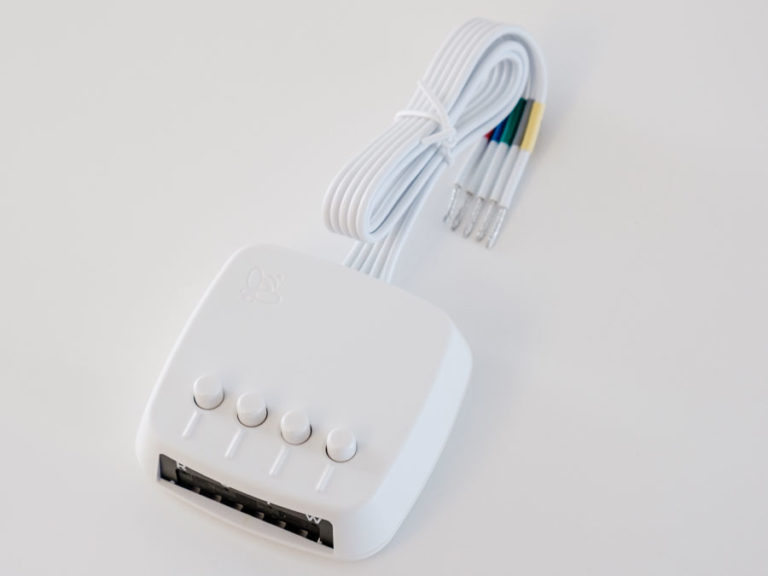
Geofencing and motion-sensing
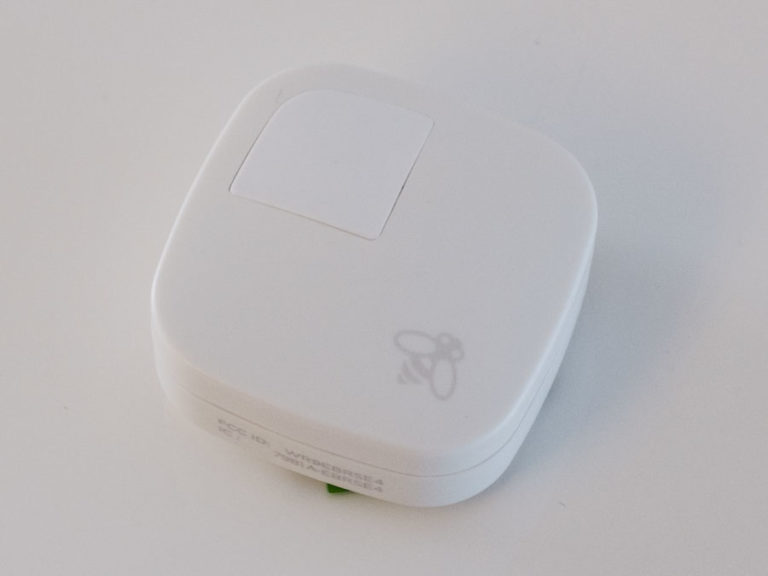
ecobee’s flagship adds radar occupancy sensing, supports SmartSensor room sensors, and offers eco+ features that automate setbacks when you’re away and can align with utility demand response events. These capabilities reflect the broader shift toward grid-interactive efficiency emphasized by DOE’s VPP Liftoff and common DR standards such as OpenADR. Combined with app-based scheduling and weather awareness, these features help deliver the ~8% average HVAC savings associated with ENERGY STAR-certified smart thermostats.
Points to consider
Matter status and ecosystem notes
As of 2025, ecobee thermostats have not rolled out Matter support, so advanced features are best managed in the ecobee app alongside integrations with Alexa, Google Assistant, Apple Home, and SmartThings. If you require Matter for multi-ecosystem local control today, see our Nest/Sensi notes below and the latest from the Connectivity Standards Alliance on Matter 1.3.
Not as sleek as the Nest
Design is subjective, but many users still prefer the Nest Learning Thermostat’s compact, metal-ring aesthetic. ecobee’s focus is function-first: sensors, IAQ monitoring, and grid-ready automation.

Pros
Machine learning tech
Customer support
Aesthetically pleasing
Cons
PEK not included
No Apple HomeKit
Why we chose it
Machine learning tech
The Nest Learning Thermostat builds schedules based on your adjustments and presence, aiming to reduce runtime without sacrificing comfort. Nest also participates broadly in utility programs like Rush Hour Rewards, where enrolled homes receive automated, temporary setpoint changes during peak events with user override — a core capability in modern DR/VPP programs noted by DOE (VPP Liftoff).
Customer support
Users report solid guidance through Nest’s online resources and channels. If you’re having trouble during or after installation, help is available by phone, chat, email, and even Twitter. For power stability issues, Google documents when to add a C wire or install the Nest Power Connector (support).
Aesthetically pleasing
Nest’s industrial design remains a standout. The metal ring, simple interface, and glanceable display make day-to-day use intuitive.
Points to consider
PEK not included
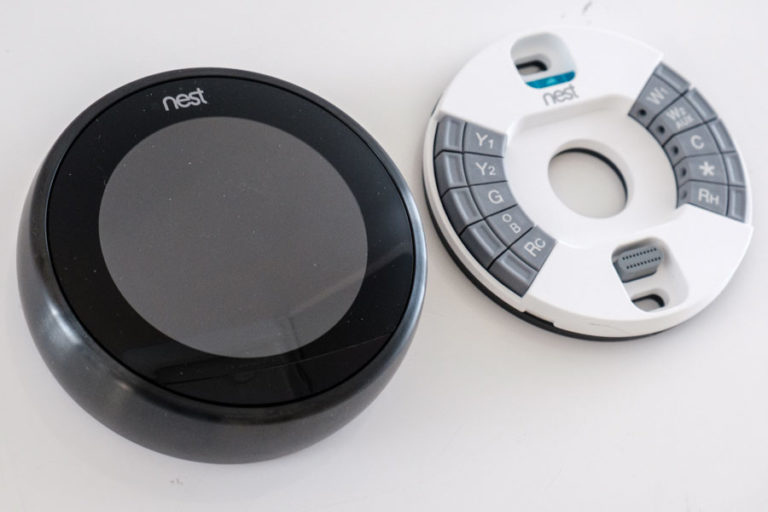
The Nest Learning Thermostat may work without a C wire in some systems, but Google recommends adding a C wire or using the Nest Power Connector when power issues are detected or for sensitive equipment (Nest C‑wire guidance). A true C connection is the most reliable path for Wi‑Fi radios and learning features.
No Apple HomeKit (and Matter nuance)
The Nest Learning Thermostat does not support Apple HomeKit or Matter. If you need Matter today for multi-ecosystem control, note that Google’s Nest Thermostat (2020) supports Matter over Thread, while the Learning model does not (Google Matter support).
How to Find the Right Thermostat for You
Make sure you have a C wire
Most modern smart thermostats require or strongly recommend a C wire for stable power. If you don’t see a C terminal behind your current thermostat, check at the furnace/air handler control board and verify about 24 VAC between R and C with a meter. If you’re missing a C, consider: using an unused conductor, running new 18/5 cable, or installing the brand’s power extender (e.g., Nest Power Connector, ecobee PEK, or Resideo C‑Wire Adapter). Avoid relying on power‑stealing if the system shows instability.
Consider how this will affect your warranty
In the U.S., manufacturers generally can’t void a warranty just because you used independent installation or parts; they must prove that caused the issue (FTC/Magnuson‑Moss). In the EU, consumers get a minimum two‑year legal guarantee for goods (EU guarantees). Some brands offer extended coverage when installed by pros; weigh that cost against retailer protections and your legal baselines. Right‑to‑repair laws are also expanding access to parts and documentation (e.g., Oregon’s law effective 2025: SB 1596).
Think about data collection
Smart thermostats collect device and usage data to enable learning and remote control. New policies improve transparency and security: the UK’s PSTI regime is in force (banning default passwords and requiring published update periods; UK PSTI), the FCC’s voluntary U.S. Cyber Trust Mark label is expected on products in 2025, the EU Data Act applies from September 2025 (user data access/portability with safeguards), and EU RED cybersecurity requirements apply August 2025 (Q&A). Practical tips: review app permissions, keep firmware updated, enable two‑factor authentication, and prefer local control via Matter where available. Threat reports still show botnets targeting weak credentials in consumer IoT (ENISA 2024).
Do your homework
Check ENERGY STAR listings for certified models and rebates, and compare ecosystem needs (e.g., Matter, Apple Home). Adoption continues to grow from a mid‑teens U.S. household baseline observed in 2020 (EIA RECS 2020). Utility programs such as Nest’s Rush Hour Rewards and ecobee peak savings programs can add incentives and savings on top of the device’s baseline efficiency.
FAQ
Comparison Chart
(current comparable: ecobee Smart Thermostat Premium) | (3rd gen; no Matter) | |
| Price | ||
| PEK included | ||
| Geofencing | ||
| Remote access | ||
| Machine learning tech | ||
| Smart home compatibility |
Recently Added


