

Each year, CES Unveiled feels a bit like a speed-dating session, but the conversation this time centered on interoperability, local control, and on‑device intelligence. Exhibitors repeatedly pointed to recent Matter updates (v1.4 and v1.5) for multi‑admin control across Apple, Google, Amazon, and SmartThings, low‑power Thread meshes (Thread overview), and hybrid AI assistants. Platforms are shifting key tasks to run locally for speed and privacy—Apple’s Apple Intelligence splits on‑device processing from Private Cloud Compute, while Samsung’s CES messaging framed the home as “AI‑enabled” across appliances and displays (Samsung CES 2025). Security labeling also featured in roadmaps via the U.S. Cyber Trust Mark, with labels expected on consumer IoT beginning 2025.
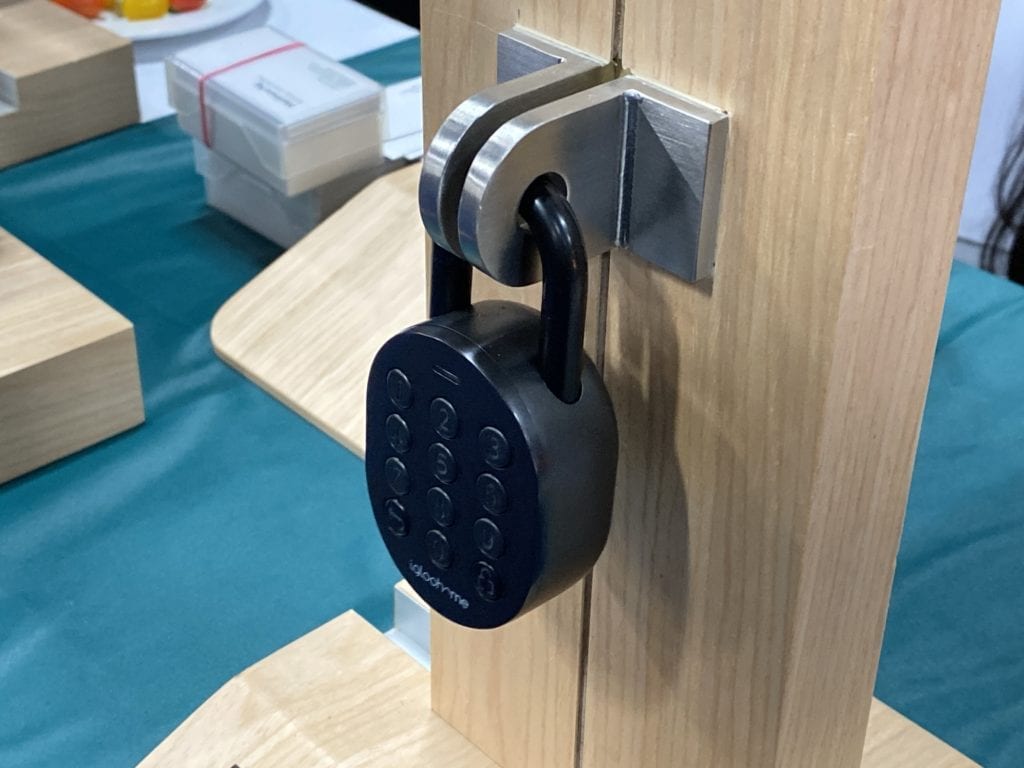
Companies like igloohome, Hampton, and Somfy showcased their takes on access control, but the broader lock category has clearly moved toward standardized, local‑first options. Notable examples include the Yale Approach retrofit lock with native Matter‑over‑Thread for multi‑ecosystem control, Apple Home Key expansion with the Schlage Encode Plus and Level Lock+, and renter‑friendly retrofits like SwitchBot Lock Pro that can add Matter via a companion hub. Keypad/PIN access remains popular for guests and short‑term rentals, while standardized Matter control (CSA Matter 1.4) reduces reliance on per‑brand clouds. As devices ship through 2025, look for emerging security labels under the U.S. Cyber Trust Mark program as a quick signal of baseline protections.
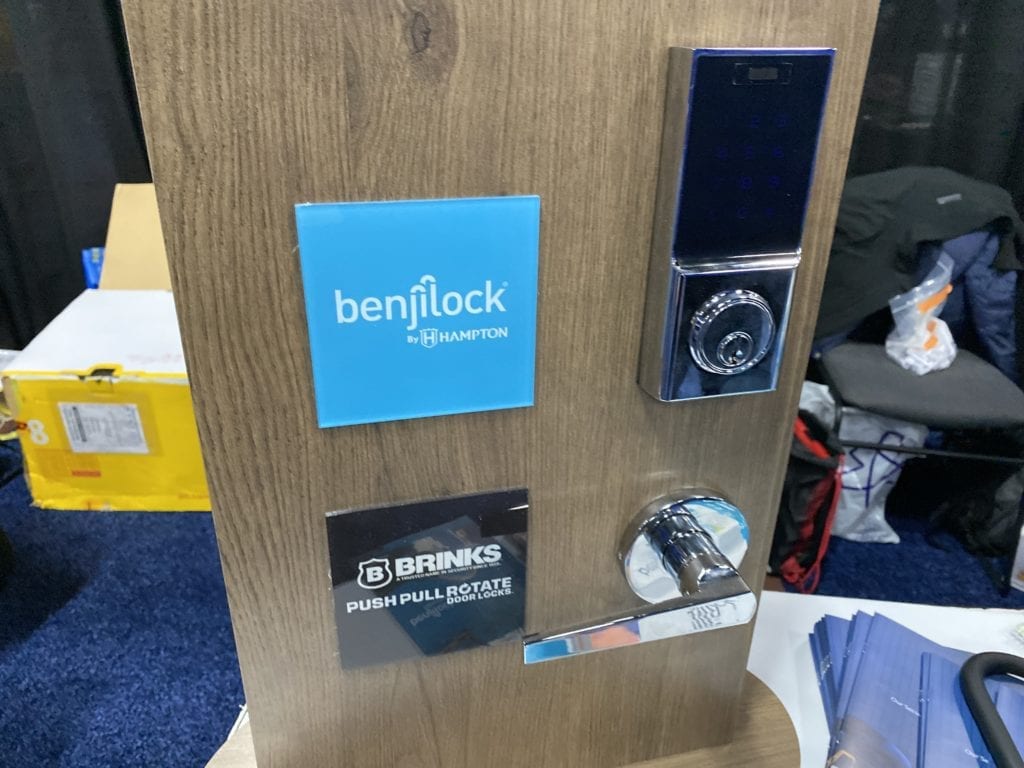
Lock company Hampton had two lines on display: Benjilock by Hampton and Array by Hampton. Fingerprint‑enabled padlocks and deadbolts speak to the broader rise of biometrics, while category leaders are layering in standardized connectivity and NFC tap‑to‑unlock. For instance, Home Key is now available on the Schlage Encode Plus and Level Lock+, and Matter‑over‑Thread retrofits like the Yale Approach aim to simplify multi‑ecosystem control without swapping exterior hardware. As vendors prepare for 2025, expect clearer security disclosures and labeling aligned to the U.S. Cyber Trust Mark.
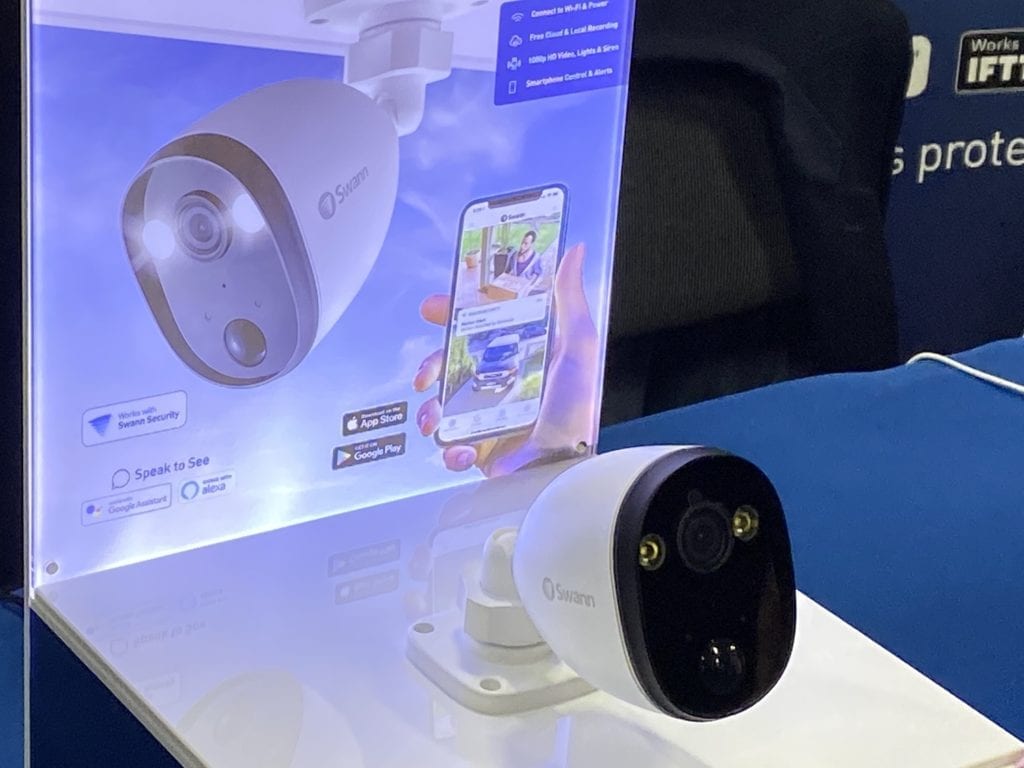
On the camera side, legacy DIY players like Swann highlighted spotlight models with integrated lighting, and the wider market has made on‑camera AI the default. Built‑in analytics now detect and classify people/vehicles on‑device (see Axis Object Analytics), improving alert accuracy and reducing bandwidth. Interoperability for analytics is advancing through ONVIF Profile M, which standardizes how cameras publish events/metadata so different software can consume them consistently. Imaging has improved with high‑sensitivity sensors such as Sony STARVIS 2, while cloud video platforms emphasize AI‑assisted search and hybrid architectures (2025 cloud/AI trends). Note that broad camera control via Matter remains limited; today’s cross‑brand camera integrations are more commonly achieved through standards like ONVIF.
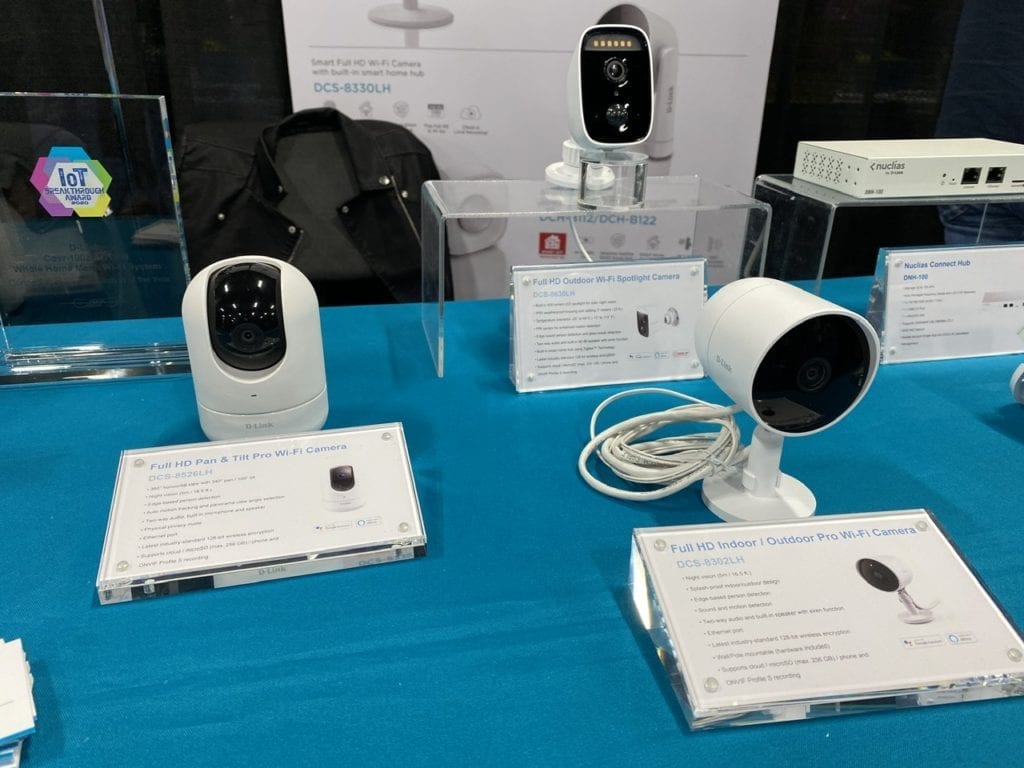
D‑Link also showed new indoor/outdoor cameras, and the emphasis on “edge‑based” person detection reflects a broader shift enabled by modern vision processors. Current smart‑camera SoCs can deliver 7–20 TOPS for on‑device AI along with integrated ISP and video encoding, supporting real‑time detection and tracking at high resolutions (Hailo‑15). For interoperability, vendors increasingly expose analytics via ONVIF Profile M so VMS/cloud platforms can act on standardized events and metadata. The net effect is faster, more private alerts without having to stream everything to the cloud—and fewer false alarms than legacy motion detection (illustrated by Axis Object Analytics).
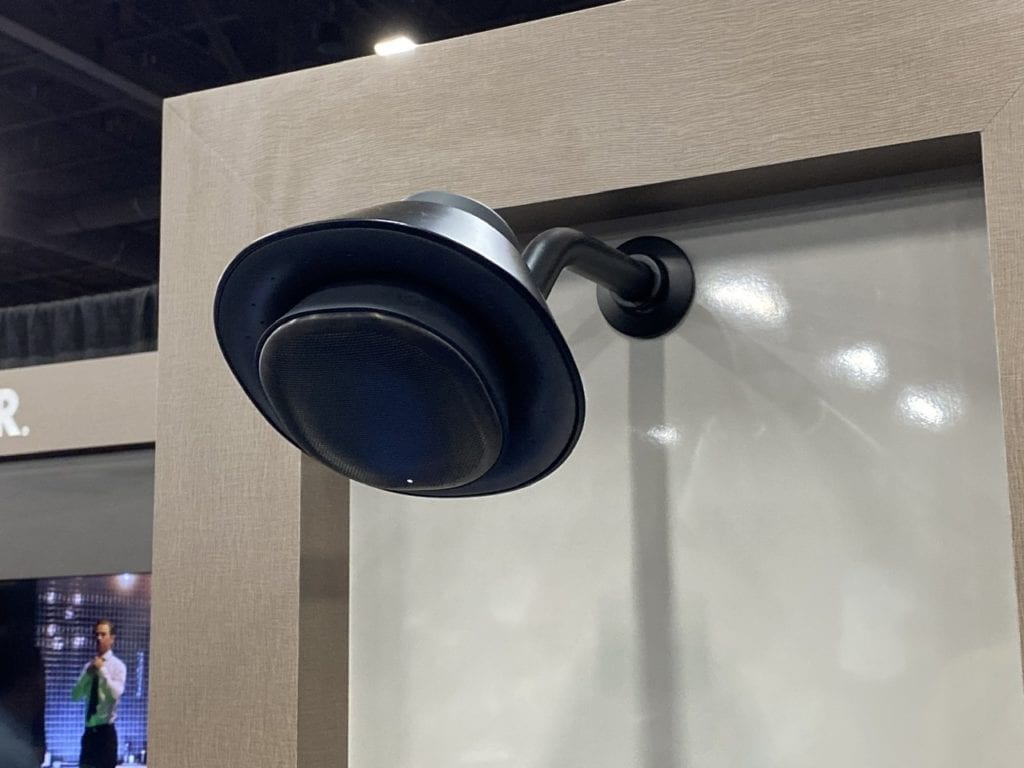
It’s not just about doors and cameras. Kohler’s Moxie shower head with detachable speaker fits a broader shift toward assistant‑compatible fixtures, while the assistant landscape itself is changing. The prevailing pattern is hybrid: run latency‑sensitive tasks on‑device and escalate complex requests to the cloud—exemplified by Apple’s Private Cloud Compute approach and Samsung’s AI‑forward smart‑home vision (CES 2025). For cross‑ecosystem control, Matter continues to expand capabilities (CSA 1.4), and platforms like Google are consolidating developer access to device control and automations via the Home APIs.
Elsewhere, Alarm.com discussed whole‑home leak protection with continuous water flow monitoring and automatic shutoff. Its inline Smart Water Valve + Meter provides whole‑home analytics and mitigation (device details), while the non‑invasive Water Dragon straps onto a pipe and “listens” ultrasonically to learn usage and detect leaks without cutting into plumbing (product overview). The need is clear: the EPA’s WaterSense program estimates typical homes can waste nearly 10,000 gallons per year and that 10% of homes leak 90+ gallons per day (EPA WaterSense). Insurers continue to flag non‑weather water losses as frequent and costly, spurring adoption of monitoring and automatic shutoff solutions (industry analysis).

Overall, Unveiled signaled that smart‑home and security brands are converging on a few pillars: Matter for cross‑ecosystem control (1.4, 1.5), Thread as the default low‑power mesh (Thread), on‑device AI paired with cloud search, and security labeling anchored by the U.S. Cyber Trust Mark. For cameras specifically, interoperability of analytics is being advanced through ONVIF Profile M, while broad Matter support for cameras remains limited/ongoing. It adds up to an active, competitive year ahead—one where that recently announced alliance and adjacent standards work should keep making the smart home easier to mix, match, and trust.


