

Quick facts
The ten safest states for driving:
- 10) Connecticut (0.93 fatalities per 100 million vehicle miles, -56% change since 1975)
- 9) Wisconsin (0.89 fatalities per 100 million vehicle miles, -73% change since 1975)
- 8) Washington (0.88 fatalities per 100 million vehicle miles, -72% change since 1975)
- 7) Maryland (0.84 fatalities per 100 million vehicle miles, -68% change since 1975)
- 6) Utah (0.81 fatalities per 100 million vehicle miles, -76% change since 1975)
- 5) New York (0.76 fatalities per 100 million vehicle miles, -79% change since 1975)
- 4) Rhode Island (0.74 fatalities per 100 million vehicle miles, -62% change since 1975)
- 3) New Jersey (0.73 fatalities per 100 million vehicle miles, -66% change since 1975)
- 2) Minnesota (0.63 fatalities per 100 million vehicle miles, -79% change since 1975)
- 1) Massachusetts (0.54 fatalities per 100 million vehicle miles, -80% change since 1975)
The ten most dangerous states for driving:
- 10) Montana (1.43 fatalities per 100 million vehicle miles, -72% change since 1975)
- 9) New Mexico (1.43 fatalities per 100 million vehicle miles, -74% change since 1975)
- 8) Oklahoma (1.44 fatalities per 100 million vehicle miles, -57% change since 1975)
- 7) Alaska (1.46 fatalities per 100 million vehicle miles, -67% change since 1975)
- 6) Kentucky (1.46 fatalities per 100 million vehicle miles, -58% change since 1975)
- 5) West Virginia (1.51 fatalities per 100 million vehicle miles, -65% change since 1975)
- 4) Arizona (1.53 fatalities per 100 million vehicle miles, -63% change since 1975)
- 3) Louisiana (1.53 fatalities per 100 million vehicle miles, -67% change since 1975)
- 2) Mississippi (1.63 fatalities per 100 million vehicle miles, -57% change since 1975)
- 1) South Carolina (1.83 fatalities per 100 million vehicle miles, -54% change since 1975)
Those improvements came as people drove more in 2023, helping bring the rate down as vehicle miles traveled increased. Even so, deaths remain above pre-2020 levels; for context, there were 36,835 fatalities in 2018.
But there are some sober warnings in the data. Pedestrian deaths reached their highest level in four decades in 2022 (about 7,500), and bicyclist deaths climbed to 1,105, the highest since the mid-1970s. Preliminary 2023 figures suggest only a modest decline in pedestrian fatalities from 2022’s peak, and large-truck involvement in fatal crashes remained a concern.
For those of you who live in cities, here is a trend to keep an eye on: Urban areas accounted for a majority of U.S. motor vehicle crash deaths in 2022 (about 57%), continuing a post-2016 shift in which urban fatalities exceed rural. In cities, vulnerable road users—especially pedestrians and cyclists—make up a growing share of deaths, with nighttime crashes on multi-lane arterials, speeding, impairment, and distraction among the key contributors.
Reviews.com compiled a list of the most dangerous states for driving using data from the National Highway Traffic Safety Administration and from analysis by the Insurance Institute for Highway Safety. There were a total of 36,835 deaths as a result of motor vehicle crashes in the U.S. in 2018 (final), the baseline year many of these state rates reflect. Nationally, NHTSA’s early estimate for 2023 is about 40,990 deaths and a fatality rate near 1.26 per 100 million miles, with additional declines indicated in early 2024.
Take a look at how your state compares, and always drive safely.
[ Read: The Best Car Insurance Companies ]
#50. Massachusetts
– Fatalities per 100 million vehicle miles: 0.54 (-80% change since 1975)
– Total fatalities: 360 (-58.0% change since 1975)
– Percent of fatalities related to speeding: 26.4% (#31 highest of all states)
– Percent of fatalities with a driver over .08 BAC: 33.3% (#8 highest of all states)
– Deaths by road user type: 49.1% car, 25.6% light trucks, 2.9% large trucks, 21.3% motorcycles, 1.1% other or unknown
Massachusetts prohibits handheld phone use while driving in addition to its texting ban. Nearly three of every four Massachusetts drivers and front-seat passengers wear seat belts, which have saved more than 374,000 lives between 1975 and 2017 around the country. Massachusetts was also among the states with the lowest percentage of fatalities on rural roads.
Canva
#49. Minnesota
– Fatalities per 100 million vehicle miles: 0.63 (-79% change since 1975)
– Total fatalities: 381 (-49.0% change since 1975)
– Percent of fatalities related to speeding: 29.7% (#22 highest of all states)
– Percent of fatalities with a driver over .08 BAC: 27.6% (#28 highest of all states)
– Deaths by road user type: 41.3% car, 35.8% light trucks, 1.2% large trucks, 18.0% motorcycles, 3.7% other or unknown
Minnesotans report high seat belt use, and police are allowed to stop drivers solely for failing to buckle up under the state’s primary seat belt law. Minnesota also prohibits handheld phone use while driving.
Officials continue to emphasize speed management and compliance with traffic signals as statewide safety priorities.
[ Read: The Best Cheap Auto Insurance Companies ]

Canva
#48. New Jersey
– Fatalities per 100 million vehicle miles: 0.73 (-66% change since 1975)
– Total fatalities: 564 (-46.0% change since 1975)
– Percent of fatalities related to speeding: 20.2% (#41 highest of all states)
– Percent of fatalities with a driver over .08 BAC: 22.2% (#45 highest of all states)
– Deaths by road user type: 54.2% car, 26.1% light trucks, 3.5% large trucks, 14.3% motorcycles, 1.9% other or unknown
New Jersey’s seat belt use is above the national average. The state prohibits hand-held phone use and has one of the country’s strictest graduated licensing systems, which imposes restrictions on new drivers’ hours and passengers.

Canva
#47. Rhode Island
– Fatalities per 100 million vehicle miles: 0.74 (-62% change since 1975)
– Total fatalities: 59 (-46.0% change since 1975)
– Percent of fatalities related to speeding: 45.8% (#3 highest of all states)
– Percent of fatalities with a driver over .08 BAC: 33.9% (#6 highest of all states)
– Deaths by road user type: 36.0% car, 24.0% light trucks, 0.0% large trucks, 36.0% motorcycles, 4.0% other or unknown
A group called Advocates for Highway and Auto Safety, an alliance of public safety, law enforcement, insurance companies, and other groups, gave Rhode Island top marks for its safety laws, including a ban on texting and requiring seat belt use. Areas often cited for improvement include universal motorcycle helmet use, nighttime restrictions for new drivers, and limiting an unrestricted license to those 18 and older.

Sean Pavone // Shutterstock
#46. New York
– Fatalities per 100 million vehicle miles: 0.76 (-79% change since 1975)
– Total fatalities: 943 (-60.0% change since 1975)
– Percent of fatalities related to speeding: 29.1% (#24 highest of all states)
– Percent of fatalities with a driver over .08 BAC: 32.6% (#10 highest of all states)
– Deaths by road user type: 45.6% car, 26.3% light trucks, 1.5% large trucks, 23.0% motorcycles, 3.6% other or unknown
New York City operates speed-safety cameras citywide 24/7, and statewide enforcement targets high-risk driving behaviors such as speeding and red-light running. The state also requires seat belt use for passengers in all seating positions.

Bob Pool // Shutterstock
#45. Utah
– Fatalities per 100 million vehicle miles: 0.81 (-76% change since 1975)
– Total fatalities: 260 (-4.0% change since 1975)
– Percent of fatalities related to speeding: 26.9% (#30 highest of all states)
– Percent of fatalities with a driver over .08 BAC: 23.5% (#43 highest of all states)
– Deaths by road user type: 38.4% car, 32.9% light trucks, 3.7% large trucks, 21.5% motorcycles, 3.7% other or unknown
Utah has among the lowest percentages of alcohol-impaired driving fatalities among all traffic fatalities. Utah remains the only state with a 0.05% per se BAC limit, a recommendation from the National Transportation Safety Board.

Canva
#44. Maryland
– Fatalities per 100 million vehicle miles: 0.84 (-68% change since 1975)
– Total fatalities: 501 (-25.0% change since 1975)
– Percent of fatalities related to speeding: 24.6% (#35 highest of all states)
– Percent of fatalities with a driver over .08 BAC: 24.4% (#42 highest of all states)
– Deaths by road user type: 52.9% car, 27.1% light trucks, 2.5% large trucks, 17.0% motorcycles, 0.5% other or unknown
Maryland has strengthened DUI penalties for drivers with prior convictions and those who kill someone. Like Utah, it has one of the lowest percentages of alcohol-related driving fatalities in the U.S.
Canva
#43. Washington
– Fatalities per 100 million vehicle miles: 0.88 (-72% change since 1975)
– Total fatalities: 546 (-28.0% change since 1975)
– Percent of fatalities related to speeding: 32.8% (#16 highest of all states)
– Percent of fatalities with a driver over .08 BAC: 30.4% (#13 highest of all states)
– Deaths by road user type: 43.6% car, 34.4% light trucks, 2.1% large trucks, 18.9% motorcycles, 0.9% other or unknown
In the state of Washington, almost everyone wears seat belts, with the percentage of drivers and front-seat passengers buckling up coming in at 97%. Drivers cannot hold their phones even while stopped in traffic. Washington has been out front on battling distracted driving, and more than a decade ago, it became the first state to ban texting while driving.
Song_about_summer // Shutterstock
#42. Wisconsin
– Fatalities per 100 million vehicle miles: 0.89 (-73% change since 1975)
– Total fatalities: 588 (-37.0% change since 1975)
– Percent of fatalities related to speeding: 31.6% (#17 highest of all states)
– Percent of fatalities with a driver over .08 BAC: 33.8% (#7 highest of all states)
– Deaths by road user type: 43.5% car, 35.2% light trucks, 2.7% large trucks, 15.8% motorcycles, 2.9% other or unknown
Wisconsin considers a first-time drunk driving offense a traffic violation rather than a crime, which some lawmakers have been trying to change. The percentage of alcohol-impaired driving fatalities is higher in Wisconsin than in any neighboring state. Policymakers continue to debate broader hands-free requirements beyond the existing texting ban.
barbsimages // Shutterstock
#41. Connecticut
– Fatalities per 100 million vehicle miles: 0.93 (-56% change since 1975)
– Total fatalities: 294 (-24.0% change since 1975)
– Percent of fatalities related to speeding: 30.6% (#19 highest of all states)
– Percent of fatalities with a driver over .08 BAC: 39.1% (#3 highest of all states)
– Deaths by road user type: 52.8% car, 21.5% light trucks, 3.9% large trucks, 21.0% motorcycles, 0.9% other or unknown
Some 87% of Connecticut drivers and front-seat passengers wear their seat belts, just over the national average. The state’s Department of Public Health has recommended that everyone in a vehicle be required to buckle up to improve safety. Alcohol-impaired driving has been a persistent factor in fatal crashes in the state.

All About Space // Shutterstock
#40. Maine
– Fatalities per 100 million vehicle miles: 0.93 (-70% change since 1975)
– Total fatalities: 137 (-39.0% change since 1975)
– Percent of fatalities related to speeding: 30.7% (#18 highest of all states)
– Percent of fatalities with a driver over .08 BAC: 30.7% (#11 highest of all states)
– Deaths by road user type: 41.4% car, 37.5% light trucks, 0.0% large trucks, 18.0% motorcycles, 3.1% other or unknown
Maine gets good marks for its driving safety laws from the Advocates for Highway and Auto Safety, though it recommends requiring helmets for all motorcycle riders, placing restrictions on young drivers, and prohibiting open containers. A hands-free phone law is in effect, and transportation officials warn that chronic underfunding has prevented the state from investing more in its roads and bridges, a potential hazard for drivers.

Isamare // Shutterstock
#39. Ohio
– Fatalities per 100 million vehicle miles: 0.93 (-66% change since 1975)
– Total fatalities: 1,068 (-40.0% change since 1975)
– Percent of fatalities related to speeding: 27.2% (#29 highest of all states)
– Percent of fatalities with a driver over .08 BAC: 27.5% (#29 highest of all states)
– Deaths by road user type: 50.3% car, 29.6% light trucks, 3.0% large trucks, 15.9% motorcycles, 1.2% other or unknown
Ohio has considered strengthening its graduated driver licensing system so that novice drivers gain more experience under safer conditions. Safety advocates have also recommended tougher motorcycle helmet laws, among other changes.

Canva
#38. Vermont
– Fatalities per 100 million vehicle miles: 0.93 (-78% change since 1975)
– Total fatalities: 68 (-52.0% change since 1975)
– Percent of fatalities related to speeding: 36.8% (#12 highest of all states)
– Percent of fatalities with a driver over .08 BAC: 22.1% (#47 highest of all states)
– Deaths by road user type: 54.8% car, 29.0% light trucks, 3.2% large trucks, 11.3% motorcycles, 1.6% other or unknown
Vermont has one of the highest percentages of fatalities on rural roads. The state requires seat belt use from the driver and all passengers. For the driver and front-seat passenger, compliance is just under the national average.

Canva
#37. Michigan
– Fatalities per 100 million vehicle miles: 0.95 (-69% change since 1975)
– Total fatalities: 974 (-45.0% change since 1975)
– Percent of fatalities related to speeding: 25.2% (#34 highest of all states)
– Percent of fatalities with a driver over .08 BAC: 27.4% (#30 highest of all states)
– Deaths by road user type: 45.5% car, 33.9% light trucks, 1.2% large trucks, 17.7% motorcycles, 1.6% other or unknown
Michigan’s seat belt law is well established and compliance is high. The state also enacted a hands-free law in 2023 that prohibits holding a mobile device while driving.

GagliardiPhotography // Shutterstock
#36. Illinois
– Fatalities per 100 million vehicle miles: 0.96 (-73% change since 1975)
– Total fatalities: 1,031 (-49.0% change since 1975)
– Percent of fatalities related to speeding: 42.1% (#6 highest of all states)
– Percent of fatalities with a driver over .08 BAC: 30.0% (#16 highest of all states)
– Deaths by road user type: 48.1% car, 31.2% light trucks, 3.7% large trucks, 14.2% motorcycles, 2.8% other or unknown
Illinois defines the use of any kind of handheld electronic device while driving, including phones, as a moving violation. Your license can be suspended after you receive three tickets in a year. Hands-free calls are allowed.
thodonal88 // Shutterstock
#35. Iowa
– Fatalities per 100 million vehicle miles: 0.96 (-74% change since 1975)
– Total fatalities: 318 (-53.0% change since 1975)
– Percent of fatalities related to speeding: 19.5% (#43 highest of all states)
– Percent of fatalities with a driver over .08 BAC: 26.7% (#31 highest of all states)
– Deaths by road user type: 40.1% car, 37.0% light trucks, 2.8% large trucks, 14.9% motorcycles, 5.1% other or unknown
Iowa has considered expanding its ban on texting while driving to make it illegal to use a phone except hands-free, though you would be allowed to accept or disconnect a call. Many states now prohibit the use of handheld phones while driving, covering all drivers.
Mattsociety // Shutterstock
#34. Virginia
– Fatalities per 100 million vehicle miles: 0.96 (-67% change since 1975)
– Total fatalities: 820 (-17.0% change since 1975)
– Percent of fatalities related to speeding: 29.4% (#23 highest of all states)
– Percent of fatalities with a driver over .08 BAC: 29.3% (#20 highest of all states)
– Deaths by road user type: 48.6% car, 32.3% light trucks, 3.6% large trucks, 14.6% motorcycles, 0.8% other or unknown
Virginia bans handheld mobile devices while driving, aligning with Maryland, Washington D.C., and about two-dozen other states. Virginia is also making it more expensive to speed.

TierneyMJ // Shutterstock
#33. California
– Fatalities per 100 million vehicle miles: 1.02 (-67% change since 1975)
– Total fatalities: 3,563 (-13.0% change since 1975)
– Percent of fatalities related to speeding: 26.0% (#32 highest of all states)
– Percent of fatalities with a driver over .08 BAC: 30.0% (#15 highest of all states)
– Deaths by road user type: 49.1% car, 28.4% light trucks, 1.8% large trucks, 19.7% motorcycles, 1.0% other or unknown
California has taken steps to confront distracted driving, including allowing license points for repeat handheld phone violations within a defined lookback period. Statewide campaigns continue to emphasize hands-free use.
Canva
#32. Indiana
– Fatalities per 100 million vehicle miles: 1.05 (-65% change since 1975)
– Total fatalities: 858 (-24.0% change since 1975)
– Percent of fatalities related to speeding: 21.9% (#39 highest of all states)
– Percent of fatalities with a driver over .08 BAC: 26.5% (#32 highest of all states)
– Deaths by road user type: 46.2% car, 32.4% light trucks, 3.4% large trucks, 16.4% motorcycles, 1.6% other or unknown
Indiana’s reported BAC testing rates for fatally injured drivers are comparatively low, and reporting practices can affect state-by-state comparisons. Nationally, the rate was higher.
Canva
#31. Wyoming
– Fatalities per 100 million vehicle miles: 1.06 (-80% change since 1975)
– Total fatalities: 111 (-47.0% change since 1975)
– Percent of fatalities related to speeding: 34.2% (#13 highest of all states)
– Percent of fatalities with a driver over .08 BAC: 30.6% (#12 highest of all states)
– Deaths by road user type: 23.8% car, 49.5% light trucks, 9.5% large trucks, 14.3% motorcycles, 2.9% other or unknown
When it comes to the different types of vehicles in fatal crashes, Wyoming saw its highest percentage of deaths among drivers and passengers in SUVs and pickup trucks. A much lower percentage of deaths involved those traveling in cars.

Ekaterina Kondratova // Shutterstock
#30. Hawaii
– Fatalities per 100 million vehicle miles: 1.07 (-69% change since 1975)
– Total fatalities: 117 (-19.0% change since 1975)
– Percent of fatalities related to speeding: 43.6% (#4 highest of all states)
– Percent of fatalities with a driver over .08 BAC: 29.9% (#17 highest of all states)
– Deaths by road user type: 22.5% car, 29.6% light trucks, 0.0% large trucks, 47.9% motorcycles, 0.0% other or unknown
Hawaii had the highest percentage of pedestrian deaths among its fatalities at 36% and a high percentage of motorcycle deaths at 29%. By contrast, the percentage of deaths in cars, SUVs and pickups was relatively low. Advocates continue to call for a universal helmet law; the current one covers only those under the age of 18.
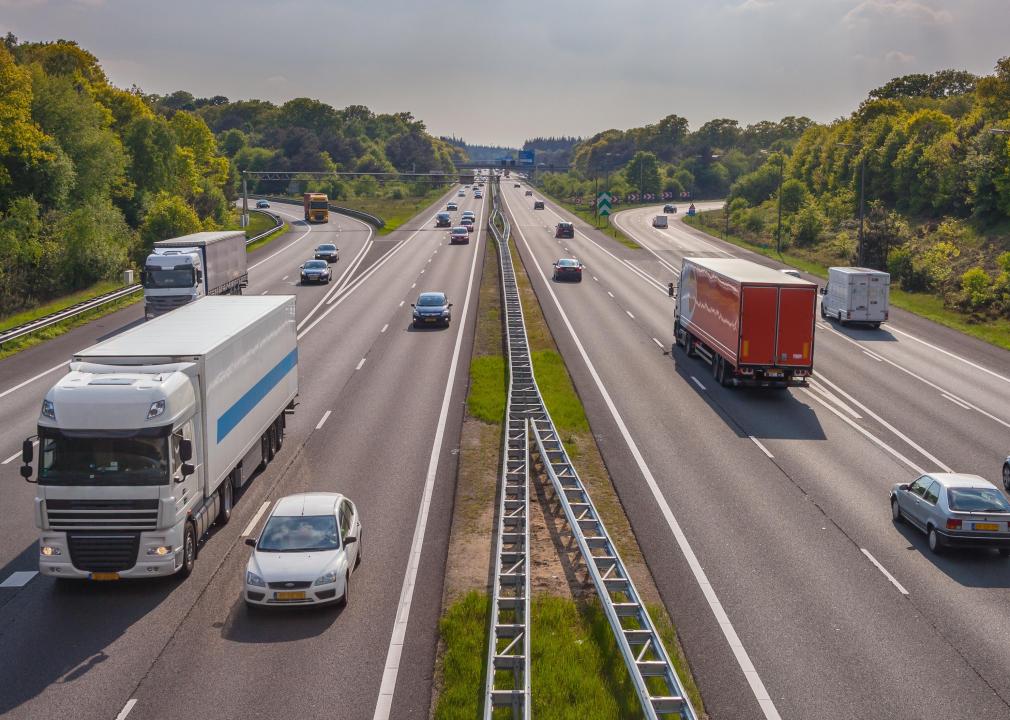
Rudmer Zwerver // Shutterstock
#29. New Hampshire
– Fatalities per 100 million vehicle miles: 1.07 (-62% change since 1975)
– Total fatalities: 147 (-3.0% change since 1975)
– Percent of fatalities related to speeding: 48.3% (#2 highest of all states)
– Percent of fatalities with a driver over .08 BAC: 32.7% (#9 highest of all states)
– Deaths by road user type: 40.6% car, 33.1% light trucks, 5.3% large trucks, 21.1% motorcycles, 0.0% other or unknown
Seat belts are required to be worn by drivers and front-seat passengers everywhere in the U.S. except New Hampshire, which has no seat belt law governing adults. Only 69% of New Hampshire drivers and front-seat passengers wear them, well below the national average of 86%. New Hampshire also had the lowest seat belt use among those killed in crashes at only 28%.

Peshkova // Shutterstock
#28. North Dakota
– Fatalities per 100 million vehicle miles: 1.07 (-71% change since 1975)
– Total fatalities: 105 (-37.0% change since 1975)
– Percent of fatalities related to speeding: 38.1% (#10 highest of all states)
– Percent of fatalities with a driver over .08 BAC: 27.6% (#27 highest of all states)
– Deaths by road user type: 22.7% car, 55.7% light trucks, 3.1% large trucks, 16.5% motorcycles, 2.1% other or unknown
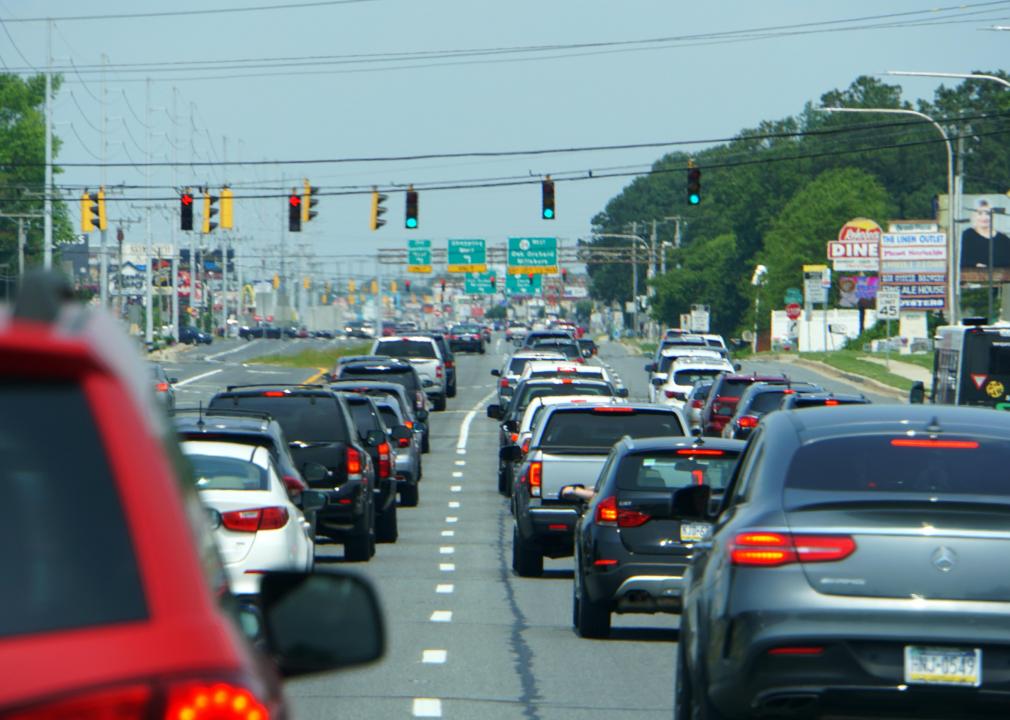
North Dakota was one of three states with the highest percentage of deaths from vehicle crashes on rural roads at 87%—the others were South Dakota (90%) and Vermont (88%). Across the country, 45% of vehicular deaths occurred in rural areas.
Khairil Azhar Junos // Shutterstock
#27. Delaware
– Fatalities per 100 million vehicle miles: 1.09 (-68% change since 1975)
– Total fatalities: 111 (-9.0% change since 1975)
– Percent of fatalities related to speeding: 29.7% (#21 highest of all states)
– Percent of fatalities with a driver over .08 BAC: 25.2% (#38 highest of all states)
– Deaths by road user type: 43.2% car, 33.3% light trucks, 1.2% large trucks, 21.0% motorcycles, 1.2% other or unknown
Delaware has had a hands-free phone law in place since 2011. Drivers may not use phones, laptops, games, or other electronic devices while driving, and fines start at $100 for a first offense.

marekuliasz // Shutterstock
#26. Nebraska
– Fatalities per 100 million vehicle miles: 1.10 (-67% change since 1975)
– Total fatalities: 230 (-38.0% change since 1975)
– Percent of fatalities related to speeding: 12.6% (#48 highest of all states)
– Percent of fatalities with a driver over .08 BAC: 28.7% (#21 highest of all states)
– Deaths by road user type: 42.2% car, 37.9% light trucks, 5.8% large trucks, 11.2% motorcycles, 2.9% other or unknown
Most deaths from motor vehicle crashes in 2018 involved only one vehicle. Nebraska, however, recorded a relatively high share of deaths in multi-vehicle crashes compared with the national average.

ESB Professional // Shutterstock
#25. Georgia
– Fatalities per 100 million vehicle miles: 1.14 (-67% change since 1975)
– Total fatalities: 1,504 (+11.0% change since 1975)
– Percent of fatalities related to speeding: 17.8% (#44 highest of all states)
– Percent of fatalities with a driver over .08 BAC: 24.9% (#40 highest of all states)
– Deaths by road user type: 44.8% car, 37.5% light trucks, 2.8% large trucks, 12.7% motorcycles, 2.2% other or unknown
Georgia has had a handheld phone prohibition in place since 2018. The state had forbidden texting while driving in 2010, but critics there and elsewhere said such a ban was unenforceable since drivers can still use their hands to place calls.

Canva
#24. Colorado
– Fatalities per 100 million vehicle miles: 1.17 (-67% change since 1975)
– Total fatalities: 632 (+9.0% change since 1975)
– Percent of fatalities related to speeding: 33.2% (#15 highest of all states)
– Percent of fatalities with a driver over .08 BAC: 29.7% (#18 highest of all states)
– Deaths by road user type: 34.0% car, 43.3% light trucks, 2.5% large trucks, 19.8% motorcycles, 0.4% other or unknown
Colorado has considered a broader hands-free ban on phone use while driving. Surveys indicate many drivers self-report distracted driving in the prior week, underscoring the need for stronger compliance and enforcement.

Peter James Sampson // Shutterstock
#23. Nevada
– Fatalities per 100 million vehicle miles: 1.17 (-75% change since 1975)
– Total fatalities: 330 (+51.0% change since 1975)
– Percent of fatalities related to speeding: 27.9% (#26 highest of all states)
– Percent of fatalities with a driver over .08 BAC: 26.4% (#33 highest of all states)
– Deaths by road user type: 42.4% car, 29.8% light trucks, 1.3% large trucks, 24.8% motorcycles, 1.7% other or unknown
Nevada has strengthened several driving laws in recent years, including a helmet requirement for moped riders on state roads, enforcement against reckless driving in places open to the public such as parking lots, and a requirement for motorists approaching a traffic accident to slow down and move over.
irin-k // Shutterstock
#22. Pennsylvania
– Fatalities per 100 million vehicle miles: 1.17 (-64% change since 1975)
– Total fatalities: 1,190 (-43.0% change since 1975)
– Percent of fatalities related to speeding: 38.2% (#9 highest of all states)
– Percent of fatalities with a driver over .08 BAC: 28.1% (#24 highest of all states)
– Deaths by road user type: 47.5% car, 29.7% light trucks, 2.1% large trucks, 17.0% motorcycles, 3.7% other or unknown
Some Pennsylvania lawmakers favor tighter laws governing phones, and the state has considered a ban on handheld phone use. In recent years, the state has required children under 2 to be buckled into a rear-facing car seat and also increased the penalty for texting and driving.

ambrozinio // Shutterstock
#21. North Carolina
– Fatalities per 100 million vehicle miles: 1.19 (-71% change since 1975)
– Total fatalities: 1,437 (-5.0% change since 1975)
– Percent of fatalities related to speeding: 22.8% (#37 highest of all states)
– Percent of fatalities with a driver over .08 BAC: 29.3% (#19 highest of all states)
– Deaths by road user type: 47.0% car, 33.4% light trucks, 2.1% large trucks, 16.0% motorcycles, 1.5% other or unknown
North Carolina maintains a graduated driver licensing system and bans texting while driving. Ongoing safety efforts include speed management and targeted enforcement to reduce serious crashes.
4kclips // Shutterstock
#20. Missouri
– Fatalities per 100 million vehicle miles: 1.20 (-65% change since 1975)
– Total fatalities: 921 (-12.0% change since 1975)
– Percent of fatalities related to speeding: 39.8% (#8 highest of all states)
– Percent of fatalities with a driver over .08 BAC: 26.1% (#34 highest of all states)
– Deaths by road user type: 42.6% car, 37.1% light trucks, 3.8% large trucks, 13.8% motorcycles, 2.7% other or unknown
Missouri enacted the Siddens Bening Hands Free Law in 2023, prohibiting holding or supporting a device while driving, with phased enforcement and education provisions accompanying rollout.

Canva
#19. Kansas
– Fatalities per 100 million vehicle miles: 1.26 (-62% change since 1975)
– Total fatalities: 404 (-21.0% change since 1975)
– Percent of fatalities related to speeding: 23.3% (#36 highest of all states)
– Percent of fatalities with a driver over .08 BAC: 21.8% (#48 highest of all states)
– Deaths by road user type: 36.8% car, 38.4% light trucks, 5.7% large trucks, 17.3% motorcycles, 1.9% other or unknown
Unlike its neighbor, Kansas banned texting by all drivers, but the state doesn’t have a statewide handheld ban for phone use. Only 80% of Kansans in the front seat, driver or passenger, buckle up, despite a law requiring seat belt use. That’s below the national average of 86%.

Dawid S Swierczek // Shutterstock
#18. Tennessee
– Fatalities per 100 million vehicle miles: 1.28 (-63% change since 1975)
– Total fatalities: 1,041 (-8.0% change since 1975)
– Percent of fatalities related to speeding: 16.0% (#46 highest of all states)
– Percent of fatalities with a driver over .08 BAC: 23.3% (#44 highest of all states)
– Deaths by road user type: 43.8% car, 32.7% light trucks, 2.6% large trucks, 18.8% motorcycles, 2.1% other or unknown
Tennessee bans handheld phone use while driving. Hands-free use is allowed, and fines for violating the law start at $50. Tennessee’s seat belt use by those in the front seat is just below the national average at 84%.
Philip Lange // Shutterstock
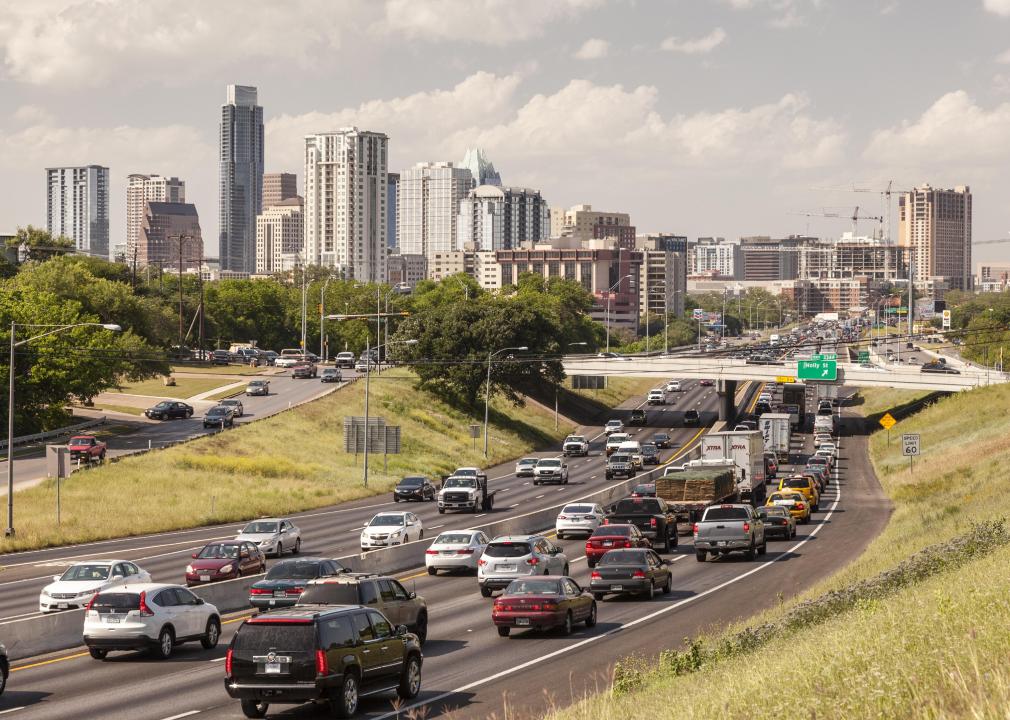
#17. Texas
– Fatalities per 100 million vehicle miles: 1.29 (-68% change since 1975)
– Total fatalities: 3,642 (+8.0% change since 1975)
– Percent of fatalities related to speeding: 27.2% (#28 highest of all states)
– Percent of fatalities with a driver over .08 BAC: 39.5% (#2 highest of all states)
– Deaths by road user type: 38.6% car, 41.4% light trucks, 4.7% large trucks, 14.2% motorcycles, 1.2% other or unknown
Texas’ ban on handheld phone use applies only while in a school crossing zone and on public school property. The state has a high rate of seat belt use at 94%.

Charles Knowles // Shutterstock
#16. Idaho
– Fatalities per 100 million vehicle miles: 1.30 (-73% change since 1975)
– Total fatalities: 231 (-18.0% change since 1975)
– Percent of fatalities related to speeding: 19.9% (#42 highest of all states)
– Percent of fatalities with a driver over .08 BAC: 25.1% (#39 highest of all states)
– Deaths by road user type: 34.8% car, 36.2% light trucks, 5.7% large trucks, 18.1% motorcycles, 5.2% other or unknown
Idaho has a hands-free phone law that applies even when stopped at a red light or stop sign. Distracted driving contributes to a significant share of crashes in the state, according to the Idaho State Police. Texting while driving has been prohibited since 2012.

Andriy Blokhin // Shutterstock
#15. Alabama
– Fatalities per 100 million vehicle miles: 1.34 (-63% change since 1975)
– Total fatalities: 953 (+6.0% change since 1975)
– Percent of fatalities related to speeding: 27.5% (#27 highest of all states)
– Percent of fatalities with a driver over .08 BAC: 25.8% (#37 highest of all states)
– Deaths by road user type: 49.2% car, 36.7% light trucks, 2.8% large trucks, 9.8% motorcycles, 1.5% other or unknown
Alabama adopted a statewide hands-free law in 2024, with an initial one-year warning period followed by citations. The state has also strengthened occupant protection with seat belt requirements for back seats as well as the front and increased penalties for drivers who fail to move over or slow down when passing stopped emergency vehicles.
Canva
#14. South Dakota
– Fatalities per 100 million vehicle miles: 1.34 (-64% change since 1975)
– Total fatalities: 130 (-33.0% change since 1975)
– Percent of fatalities related to speeding: 40.0% (#7 highest of all states)
– Percent of fatalities with a driver over .08 BAC: 34.6% (#5 highest of all states)
– Deaths by road user type: 36.1% car, 42.9% light trucks, 4.2% large trucks, 13.4% motorcycles, 3.4% other or unknown
South Dakota reports high DUI arrest rates relative to many other states, based on national compilations that use NHTSA statistics on fatal crashes along with arrest and census data.
Keep Smiling Photography // Shutterstock
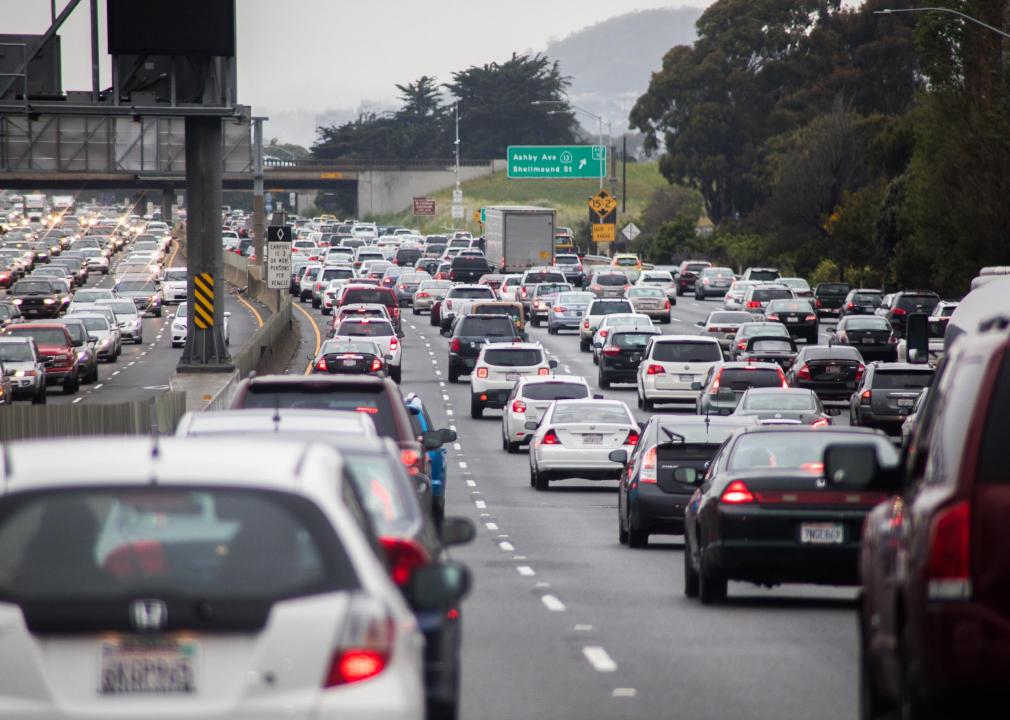
#13. Oregon
– Fatalities per 100 million vehicle miles: 1.37 (-61% change since 1975)
– Total fatalities: 506 (-10.0% change since 1975)
– Percent of fatalities related to speeding: 21.7% (#40 highest of all states)
– Percent of fatalities with a driver over .08 BAC: 30.2% (#14 highest of all states)
– Deaths by road user type: 34.7% car, 35.2% light trucks, 2.9% large trucks, 18.8% motorcycles, 8.4% other or unknown
Oregon enforces one of the nation’s stricter distracted driving laws, with steep fines for first-time offenders, and emphasizes hands-free use.
Amy Tseng // Shutterstock
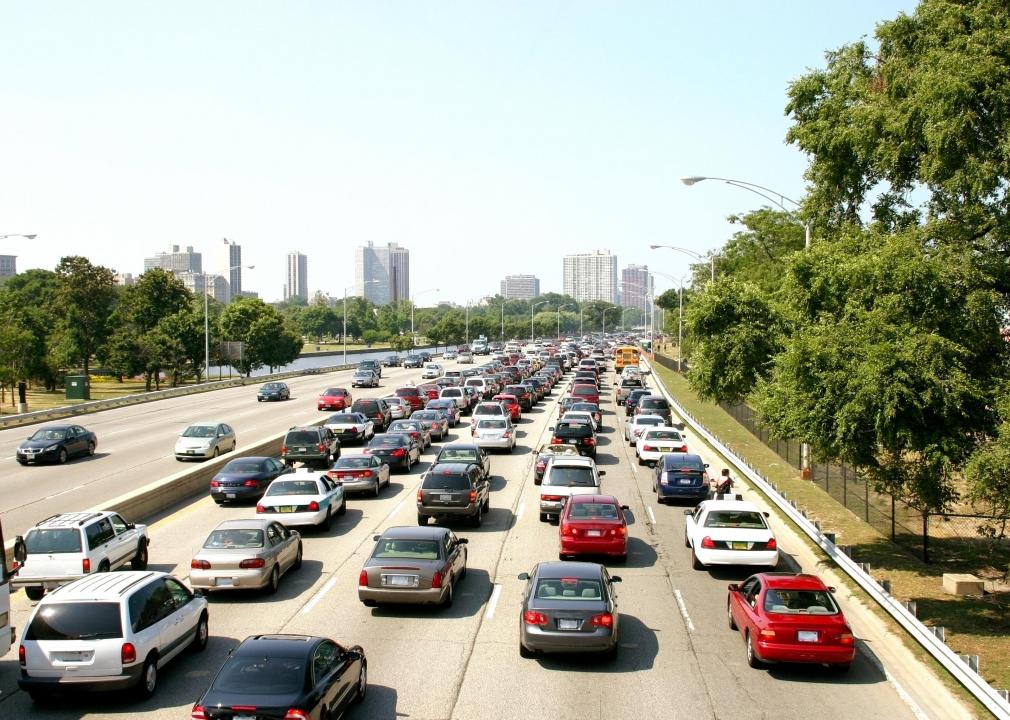
#12. Arkansas
– Fatalities per 100 million vehicle miles: 1.41 (-65% change since 1975)
– Total fatalities: 516 (-8.0% change since 1975)
– Percent of fatalities related to speeding: 25.4% (#33 highest of all states)
– Percent of fatalities with a driver over .08 BAC: 26.0% (#36 highest of all states)
– Deaths by road user type: 36.8% car, 40.8% light trucks, 5.8% large trucks, 14.6% motorcycles, 2.0% other or unknown
Arkansas set the maximum speed limit for highways at 75 miles per hour if the road is outside a city and has at least four lanes divided by a median. The state is allowing police to stop drivers solely for using a handheld wireless device in a school zone.
Anna Kraynova // Shutterstock
#11. Florida
– Fatalities per 100 million vehicle miles: 1.41 (-56% change since 1975)
– Total fatalities: 3,133 (+57.0% change since 1975)
– Percent of fatalities related to speeding: 9.7% (#49 highest of all states)
– Percent of fatalities with a driver over .08 BAC: 26.0% (#35 highest of all states)
– Deaths by road user type: 44.5% car, 26.2% light trucks, 2.4% large trucks, 25.6% motorcycles, 1.3% other or unknown
Florida now issues tickets, not warnings, to drivers caught texting while driving, and requires hands-free phone use in school and work zones. The state has also expanded its Move Over law to cover more types of stopped vehicles on the roadside.

MakDill // Shutterstock
#10. Montana
– Fatalities per 100 million vehicle miles: 1.43 (-72% change since 1975)
– Total fatalities: 182 (-37.0% change since 1975)
– Percent of fatalities related to speeding: 36.8% (#11 highest of all states)
– Percent of fatalities with a driver over .08 BAC: 43.4% (#1 highest of all states)
– Deaths by road user type: 26.1% car, 53.9% light trucks, 3.6% large trucks, 12.7% motorcycles, 3.6% other or unknown
Across the country, just over 50% of deaths resulting from vehicle crashes involved only a single vehicle. Montana topped that figure significantly and led the country at 71%.

Katrina Leigh // Shutterstock
#9. New Mexico
– Fatalities per 100 million vehicle miles: 1.43 (-74% change since 1975)
– Total fatalities: 391 (-30.0% change since 1975)
– Percent of fatalities related to speeding: 33.8% (#14 highest of all states)
– Percent of fatalities with a driver over .08 BAC: 27.6% (#26 highest of all states)
– Deaths by road user type: 36.8% car, 38.2% light trucks, 5.4% large trucks, 15.2% motorcycles, 4.4% other or unknown
New Mexico has long been a national leader in the use of ignition interlocks for DUI offenders and continues to prioritize impaired-driving enforcement and prevention.

ambrozinio // Shutterstock
#8. Oklahoma
– Fatalities per 100 million vehicle miles: 1.44 (-57% change since 1975)
– Total fatalities: 655 (-13.0% change since 1975)
– Percent of fatalities related to speeding: 22.4% (#38 highest of all states)
– Percent of fatalities with a driver over .08 BAC: 22.1% (#46 highest of all states)
– Deaths by road user type: 40.1% car, 37.5% light trucks, 5.2% large trucks, 15.9% motorcycles, 1.4% other or unknown
Oklahoma made it illegal to text and drive in 2015, with a potential penalty of $100. Its ban on handheld phone use applies only to drivers with a learner or intermediate license. Oklahoma’s use of seat belts in the front seat falls just below the national average, 84% versus 86%.

Japan_mark3 // Shutterstock
#7. Alaska
– Fatalities per 100 million vehicle miles: 1.46 (-67% change since 1975)
– Total fatalities: 80 (-29.0% change since 1975)
– Percent of fatalities related to speeding: 52.5% (#1 highest of all states)
– Percent of fatalities with a driver over .08 BAC: 36.3% (#4 highest of all states)
– Deaths by road user type: 23.1% car, 46.2% light trucks, 3.1% large trucks, 18.5% motorcycles, 9.2% other or unknown
Alaska bans handheld phone use in school zones or on school grounds, though hands-free use is allowed. The state continues to focus on reducing impaired driving and improving restraint use.

Canva
#6. Kentucky
– Fatalities per 100 million vehicle miles: 1.46 (-58% change since 1975)
– Total fatalities: 724 (-16.0% change since 1975)
– Percent of fatalities related to speeding: 15.3% (#47 highest of all states)
– Percent of fatalities with a driver over .08 BAC: 18.9% (#50 highest of all states)
– Deaths by road user type: 45.1% car, 35.4% light trucks, 2.7% large trucks, 14.9% motorcycles, 1.9% other or unknown
Kentucky offers ignition interlocks to DUI offenders and has strengthened requirements for repeat offenses, aiming to reduce impaired-driving recidivism.

Medard L Lefevre // Shutterstock
#5. West Virginia
– Fatalities per 100 million vehicle miles: 1.51 (-65% change since 1975)
– Total fatalities: 294 (-36.0% change since 1975)
– Percent of fatalities related to speeding: 29.9% (#20 highest of all states)
– Percent of fatalities with a driver over .08 BAC: 19.4% (#49 highest of all states)
– Deaths by road user type: 39.2% car, 35.1% light trucks, 4.9% large trucks, 14.7% motorcycles, 6.0% other or unknown
West Virginia enforces restrictions on teenage drivers, including a curfew and limits on passengers for new drivers. Road conditions and investment remain ongoing safety considerations.

Andrew Zarivny // Shutterstock
#4. Arizona
– Fatalities per 100 million vehicle miles: 1.53 (-63% change since 1975)
– Total fatalities: 1,010 (+51.0% change since 1975)
– Percent of fatalities related to speeding: 28.2% (#25 highest of all states)
– Percent of fatalities with a driver over .08 BAC: 28.2% (#22 highest of all states)
– Deaths by road user type: 36.6% car, 31.0% light trucks, 2.4% large trucks, 20.1% motorcycles, 9.8% other or unknown
Arizona has banned texting and other handheld use of phones, with statewide penalties in effect. Studies of crash patterns have identified high-risk corridors where traffic volumes and speeds are greatest, prompting targeted enforcement and design changes.

Tim Roberts Photography // Shutterstock
#3. Louisiana
– Fatalities per 100 million vehicle miles: 1.53 (-67% change since 1975)
– Total fatalities: 768 (-18.0% change since 1975)
– Percent of fatalities related to speeding: 17.7% (#45 highest of all states)
– Percent of fatalities with a driver over .08 BAC: 28.1% (#23 highest of all states)
– Deaths by road user type: 42.1% car, 39.1% light trucks, 3.0% large trucks, 13.8% motorcycles, 2.1% other or unknown
Some lawmakers in Louisiana have tried to pass a ban on handheld phone use while driving, and the topic continues to be debated. Louisiana already prohibits texting while driving.
Canva
#2. Mississippi
– Fatalities per 100 million vehicle miles: 1.63 (-57% change since 1975)
– Total fatalities: 664 (+22.0% change since 1975)
– Percent of fatalities related to speeding: 7.2% (#50 highest of all states)
– Percent of fatalities with a driver over .08 BAC: 24.5% (#41 highest of all states)
– Deaths by road user type: 46.0% car, 40.4% light trucks, 3.2% large trucks, 7.2% motorcycles, 3.2% other or unknown
Mississippi requires everyone in a vehicle to wear a seatbelt, restricts riding in the back of a pickup truck, and requires drivers to use the left lane for passing. Impaired driving remains a significant safety concern and priority for enforcement.

funnyangel // Shutterstock
#1. South Carolina
– Fatalities per 100 million vehicle miles: 1.83 (-54% change since 1975)
– Total fatalities: 1,037 (+26.0% change since 1975)
– Percent of fatalities related to speeding: 43.1% (#5 highest of all states)
– Percent of fatalities with a driver over .08 BAC: 28.1% (#25 highest of all states)
– Deaths by road user type: 44.1% car, 36.1% light trucks, 2.5% large trucks, 16.7% motorcycles, 0.7% other or unknown
South Carolina’s fatality rate per mile traveled is among the highest in the nation. Speeding and alcohol involvement remain key contributors, reinforcing the need for speed management, impaired-driving prevention, and targeted corridor improvements.


