
We recommend products and services based on unbiased research from our editorial team. We make money via affiliate links, which means if you click a link on our site, we may earn a commission. Any commissions we receive do not affect our recommendations; if you want to know more about how that works, read more.
Shopping for car insurance is currently elevated compared with pre-2022 norms, driven mainly by premium increases. To understand today’s shopping and switching behavior, we synthesized recent findings from industry trackers such as J.D. Power, TransUnion, and LexisNexis Risk Solutions alongside government inflation data.
The key questions we examined include:
- How frequently do people shop for car insurance?
- What factors cause users to shop around for car insurance?
- What loyalty benefits matter most for existing car insurance customers?
- What myths are out there about shopping for car insurance?
- Which factors matter most for car insurance shoppers?
We drew on national studies of U.S. auto insurance customers across vehicle types — from passenger cars and trucks to commercial vehicles, motorcycles and motorhomes — to capture how shoppers behave today.
Our aim with this research was to look beyond sticker price to the broader factors shaping decisions: how often people re-shop, what triggers them to do so, which actions help insurers retain or acquire customers, and which misconceptions still mislead buyers.
Our top 3 findings
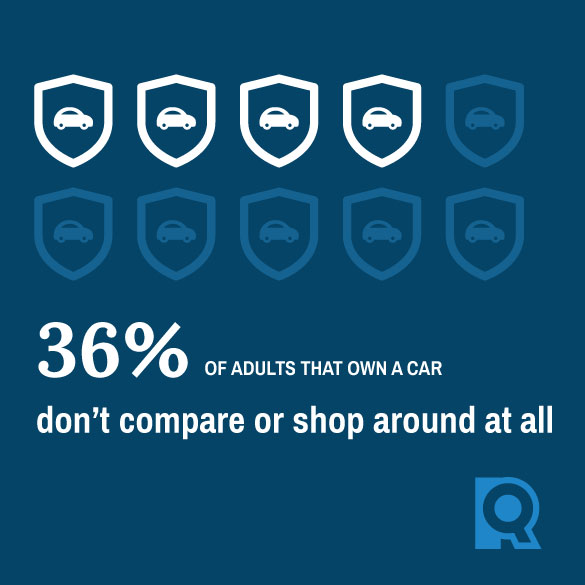
1. Around one-third of auto insurance customers shopped in the past year, and about one in eight switched
Multiple 2024–2025 studies report record-high or near-record shopping and elevated churn: roughly three in ten customers shopped their policy in the past 12 months, and about one in eight ultimately switched carriers. For insurers, that means more opportunities to win new business — but also a greater retention challenge — in a market where price is the primary catalyst for shopping. J.D. Power and TransUnion both attribute the surge largely to premium increases.
From the consumer’s perspective, comparing multiple quotes around renewal remains the most effective way to manage premium changes and uncover savings opportunities (bundling, pay-in-full, telematics). Digital tools have lowered friction, making it easier to obtain several quotes quickly at renewal or after a noticeable price change.
Why some people don’t shop: most shopping episodes cluster around renewal and after price increases. Secondary triggers include getting a new vehicle, moving, or other life events. If your situation hasn’t changed and you haven’t seen a price jump, you may not feel the need to re-shop — but in today’s market, periodic checks can still reveal savings. Insights from LexisNexis Risk Solutions and TransUnion show quote volumes spiking near renewal windows.
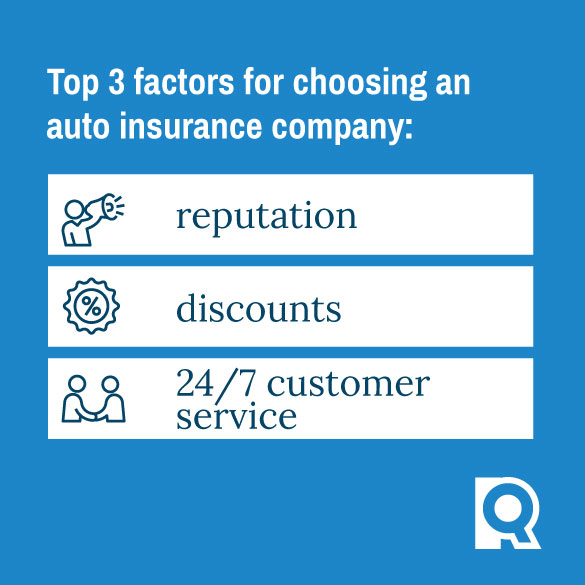
2. Beyond price, reputation/trust, discounts (including telematics), and 24/7 service/digital experience matter most
Price and rate stability dominate decisions in today’s high-cost environment, but shoppers also value brands they trust, the ability to lower premiums via discounts (multi-policy, safe driver, usage-based/telematics), and strong 24/7 service with seamless digital experiences. Advertising continues to shape which brands consumers consider and quote, though it rarely overcomes uncompetitive pricing. Industry ad tracking and consumer studies (e.g., J.D. Power 2025) point to messages centered on savings and telematics gains.
Category ad intensity remains high — insurance consistently ranks among the top U.S. ad categories by video impressions, and major auto insurers are routinely among the heaviest spenders. A Statista study and the private passenger auto insurance sector market share reports both reflect how sustained marketing supports brand salience for leaders like State Farm, Progressive, and GEICO. As carriers stabilized underwriting and resumed marketing, many saw new-business growth re-accelerate.
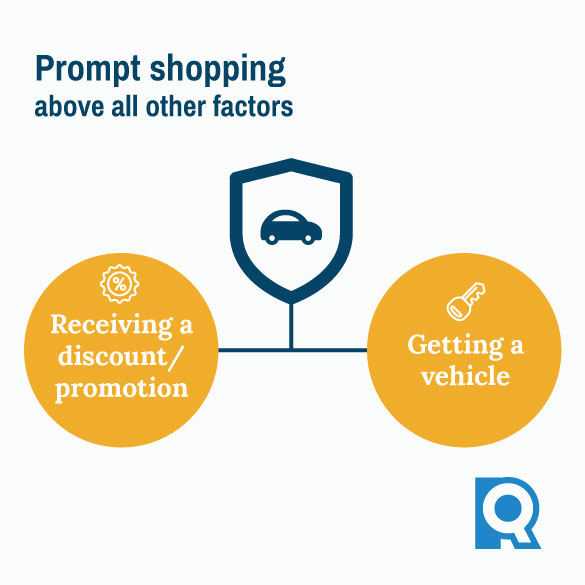
3. Price-led offers and renewal shocks are the main motivators to shop and switch; personalized discounts (telematics, bundling) convert best
Industry coverage has highlighted elevated switcher intent in recent years, and current trackers show churn remains high. Today, about one in eight auto customers switched carriers in the past year, with premium increases at renewal as the primary trigger; advertising helps shape consideration once consumers decide to shop. See Resonate for historic context and J.D. Power 2025 for the latest switching rates.
For insurers, the strongest levers continue to be price-led, immediate, and personalized: usage-based/telematics enrollment, precise multi-policy bundles, and targeted incentives (e.g., paid-in-full, auto-pay). With motor vehicle insurance inflation running unusually high in recent periods per the BLS CPI, surfacing these savings transparently during quoting is critical to win price-sensitive shoppers.
How frequently do people shop for car insurance?
Frequency of comparing/shopping around for auto insurance
- Shopped in the past 12 months: approximately three in ten customers
- Switched carriers in the past 12 months: roughly one in eight customers
- 2024 shopping volumes ran above 2023, with elevated activity persisting into 2025
Compared with 2020, both shopping and switching are higher today. Most shoppers act around renewal or after a noticeable price change, with quote volumes rising 30–60 days before renewal and immediately following renewal notices. Studies from TransUnion and LexisNexis Risk Solutions track these renewal-driven spikes.
Life events (such as a move or a car-buying habit change) also prompt re-shopping. In a high-price environment, using renewal moments and life events as reminders to compare quotes helps ensure you’re not overpaying.
What factors cause users to shop around for car insurance?
Factors that prompt comparing/shopping around
- Premium increase or renewal price change
- Receiving a discount/promotion from a competitor (including telematics enrollment or bundling)
- Life events like getting a new vehicle or moving
Premium increases are the dominant trigger today, with most shopping clustered around renewal. Secondary triggers include a new vehicle, moving, or adding/removing drivers. State-by-state dynamics and carrier actions can amplify these effects, but the national pattern remains clear: affordability drives intent, and personalized savings drive conversion. See J.D. Power and TransUnion for current trends.
Recent findings from the J.D. Power U.S. Insurance Shopping Study indicate shopping remains elevated and roughly one in eight customers switched carriers in the past year — higher than typical pre-2022 levels. This keeps conversion competitive and encourages carriers to streamline quoting and surface savings clearly.
Knowing that shoppers are highly price-driven, ask carriers about telematics programs, bundling opportunities, paid-in-full and auto-pay discounts, and whether coverage changes or higher deductibles could responsibly lower your premium. Worst case scenario: you stay with your current provider
What loyalty benefits matter most for existing car insurance customers?
Loyalty benefits
- Discount for safe driving (including usage-based/telematics)
- Value from long-term loyalty and multi-policy bundle savings
- Discounts for paying in full or via auto-pay/on-time payments
Safe-driving discounts remain highly valued, and participation in telematics programs has been rising. Many programs reward consistent safe behavior and lower annual mileage; others include a sign-up incentive. Options can include a pay-per-mile insurance policy or app-based telematics that track driving patterns to determine savings.
Consumers aren’t the only ones who like safe driving discounts, however. Most major private passenger auto insurers offer some form of safe-driving or telematics-based savings. That gives shoppers a relatively apples-to-apples way to compare value and keep more money in their pockets when they demonstrate safe driving.
Look around and see whose discounts catch your eye. A car insurance by the mile policy is perfect for people who don’t drive often, and student and bundle discounts can help families with teens. Find which discounts are most relevant to you.
Which factors matter most when choosing a car insurance company?
Important factors when choosing an auto insurance company
- Affordability (price and rate stability)
- Potential discounts available (including telematics and bundling)
- 24/7 customer service and strong digital experience
Affordability leads in today’s market, followed by the ability to reach a target price through discounts and the quality of service and digital tools. Many shoppers also value local agent access, but a growing share emphasizes seamless online quoting, mobile apps, and transparent communication about rate changes. Recent studies (e.g., J.D. Power’s Digital Experience) tie better digital journeys to higher satisfaction and conversion.
Company size by itself is less decisive than price, service, and claims performance. For example, J.D. Power’s Auto Claims Satisfaction Study shows fast, transparent claims experiences correlate with higher satisfaction and loyalty, even as industry-wide repair costs and cycle times remain under pressure.
Look past size — and by virtue of size, reputation — on occasion when looking for an insurance provider. Sometimes the best options are also the best-kept secrets.
What myths are out there about shopping for car insurance?
Myth 1: You can negotiate rates with your insurance company: False
Base rates are filed and regulated, and insurers generally won’t haggle individual prices. What you can do is lower your premium by changing risk factors under your control: enroll in telematics, bundle policies, adjust deductibles, or update garaging and mileage details. Your age, vehicle, and driving record remain what they are, but discounts and coverage choices can materially affect what you pay.
This myth persists because consumers can switch providers, which pressures insurers to be competitive, and because adding discounts can feel like negotiation even though the underlying rate calculation hasn’t changed.
Myth 2: The color of your car affects insurance rates: False
Insurers don’t rate on vehicle color. Premiums reflect factors like the specific make and model’s loss history and repair costs, your driving record, garaging location, mileage, and in many states, insurance-based credit scores — not whether your car is red or blue.
Myth 3: Parking tickets affect rates: False
Parking tickets are not moving violations and typically don’t affect premiums on their own. However, ignoring or failing to pay them can create issues (e.g., license or registration problems) that may indirectly affect your insurance. Pay tickets promptly to avoid complications.
Myth 4: You have to wait for your policy to end to switch insurance companies: False
You can cancel a standard auto policy at any time with notice to your insurer. To avoid a coverage gap, bind your new policy before canceling the old one. Some insurers may charge a short-rate cancellation fee; factor that into your savings calculation.
Myth 5: It costs more to insure your car when you get older: True and False
The relationship between age and average premiums generally looks like an inverted curve across a lifetime.
Younger drivers usually pay high premiums due to inexperience and higher risk. As drivers gain experience and maintain clean records, premiums typically fall through middle age.
Later in life, some drivers see premiums rise again as factors like health or vision issues can increase risk. Effects vary by individual profile, but programs like telematics may help demonstrate safe driving and offset costs.
Thus, while some policyholders see higher premiums as they age, others benefit from lower rates. Discounts and right-sized coverage choices can help manage costs at any stage.
Myth 6: If another person drives your car in an accident, his or her auto insurance will cover the damages: False
In most cases, auto insurance follows the car. If a friend or family member crashes your vehicle with permission, your policy is generally primary for the car’s damage and liability (subject to your coverages and limits). The driver’s policy may contribute for injuries or act as excess, depending on the circumstances and state rules.


