

New content-streaming company Quibi (pronounced like “kwibby”) is here at CES 2020 to showcase why it thinks there’s room for even more players in the streaming industry. One key selling point: content created with mobile devices in mind. In hindsight, the market moved a different way: Quibi launched in April 2020 and shut down in October 2020 (The Verge). Roku acquired Quibi’s library in January 2021 and released more than 75 former Quibi shows as “Roku Originals” beginning in May 2021, delivering a record streaming weekend for The Roku Channel (The Hollywood Reporter; Variety; The Verge). By 2025, streaming consistently accounts for roughly 40% of U.S. TV usage, with free, ad-supported and hybrid models at scale (Nielsen). We followed along via livestream to see how Quibi made its case—and how the industry ultimately absorbed parts of its vision.
Longtime movie producer and Quibi founder Jeffrey Katzenberg started things off by discussing major evolutions in entertainment, including the first silent films, adding sound and color, and the dawn to episodic television shows. Since then, the technical context for mobile streaming has accelerated: global 5G subscriptions and mobile data capacity have expanded, with video remaining the dominant driver of mobile traffic (Ericsson Mobility Report 2025). On devices, hardware AV1 decode is standard on recent flagship Android chips, enabling higher quality at lower bitrates (Qualcomm), and low-latency delivery via LL-HLS/LL-DASH is widely adopted for live sports and interactivity (Apple; Bitmovin). HDR on mobile (HDR10/Dolby Vision) is mainstream on capable phones (Apple Support).
“Every evolution has been driven by the relationship between creativity and technology,” Katzenberg said. In practice, today’s mobile video stack pairs efficient codecs (AV1) and adaptive delivery with device-aware experiences (vertical feeds, HDR) to raise quality and reliability at scale (Bitmovin; Ericsson).
To that end, Quibi aims to tailor its original content to the ways consumers watch video on their phones — taking into account not just the lengths of time people spend watching, but also how they’re holding their devices. However, COVID‑19 reshaped usage just as Quibi launched: stay‑at‑home periods boosted living‑room streaming and raised streaming’s share of TV time, a shift that has remained elevated since (Nielsen 2024). Mobile remained central to internet use, with video representing about 73% of global mobile data traffic and projected to rise further with 5G (Ericsson 2024). The mixed reality was that smartphones dominated discovery and short sessions, while connected TVs captured a growing share of long‑form viewing (Nielsen 2025).
Instead of two-hour movies or 30-minute TV shows, Quibi (short for “Quick Bites”) will offer content in short chunks. Short films and episodic content, for example, will be shown in episodes lasting around six to 10 minutes each. News and weather content will be similarly digestible. By contrast, the short‑form norms that came to dominate mobile are vertically oriented clips typically under 60–90 seconds, delivered in algorithmic feeds at massive scale: YouTube Shorts reports 2B+ logged‑in monthly users (YouTube), TikTok has 170M monthly users in the U.S. (TikTok), and data.ai finds short‑form video apps among the top drivers of time spent and consumer spend growth (data.ai). This gap—6–10 minute, paywalled episodes vs. sub‑60‑second, free vertical clips—proved consequential for adoption.
Katzenberg cited Dan Brown’s The Da Vinci Code, with its extremely short chapters, as an inspiration for how Quibi is portioning out its content. In practice, serialized micro‑episodes have flourished inside free short‑form ecosystems that funnel viewers to longer videos and live streams, including for news: usage of TikTok, Instagram Reels, and YouTube Shorts for news among 18–24s continues to rise (Reuters Institute 2025; Ofcom). Among U.S. teens, 95% use YouTube and 67% use TikTok, with notable shares reporting “almost constant” use—evidence of short‑form’s habitual pull (Pew Research).
But it’s not just time lengths where Quibi hopes to bring something new to the market. CEO Meg Whitman, who’s also led HP and eBay over the years, discussed how the company is leveraging the sensors and technology built into modern phones and letting content creators take advantage. Since then, interaction has matured in two directions: sensor‑rich spatial platforms (standardized gaze/hand inputs on visionOS; room‑aware MR via Meta’s Presence Platform) and scalable live‑video features like multiview and real‑time overlays (Apple HIG; Meta Presence Platform; YouTube TV multiview).
“What would it be like to watch a thriller that knows what time it is, or a scary story that knows if the lights are out?” Whitman posited. While bespoke sensor‑dependent storytelling remained niche, orientation‑aware and vertical‑first consumption became mainstream in adjacent contexts: Amazon added a vertical, phone‑optimized stream for Thursday Night Football on Prime Video (The Verge), and Twitch introduced a vertical Discovery Feed to help mobile users find live channels via short clips (Twitch).
Quibi also discussed its Turnstile feature, where content is presented in full-screen whether you’re holding the phone in landscape or portrait mode. Doing that properly, the company said, requires creating video with both viewing angles in mind, so all content on the platform is required to have two separate video edits: one for portrait and one for landscape. Turnstile achieved instant rotation by streaming two synchronized encodes and switching on the fly—ingenious, but it doubled storage/delivery footprints and added workflow complexity (The Verge). In 2025, most platforms instead master natively in vertical for shorts, use selective multi‑aspect outputs only when ROI justifies it, and rely on AI auto‑reframing to derive 9:16/1:1 cuts from a single timeline (Adobe Auto Reframe). Parallel advances—AV1 adoption, per‑title encoding, and standardized QoE—further reduce bits without forcing dual edits (Bitmovin; Qualcomm).
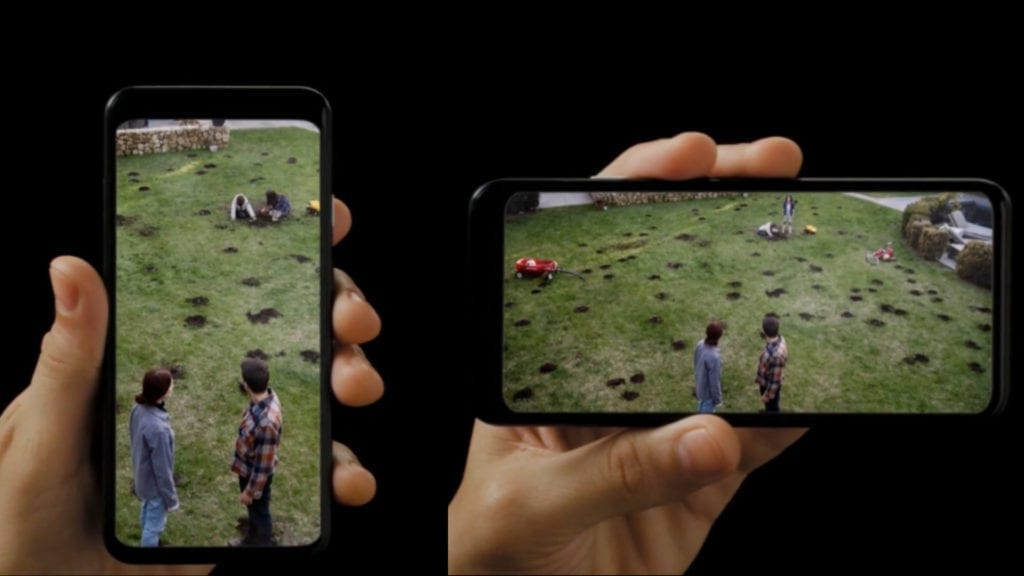
The feature can also be used to provide different experiences depending on how you hold your phone. In one example from a thriller called Nest, a woman is seen at home dealing with an intruder. If you watch in landscape mode, the story plays out via traditional widescreen camera angles. But if you flip to portrait mode, say while the character is calling for help, you’ll see a view of her phone, emulating her struggling to make a video phone call to her father. The broader industry adopted a different playbook: explicit alternate feeds (e.g., Prime Video’s vertical NFL stream) and user‑controlled multiview and overlays rather than automatic rotation‑triggered edits (Prime Video; YouTube TV). Discovery itself shifted to vertical feeds that surface short clips before handing off to long‑form viewing (Twitch).
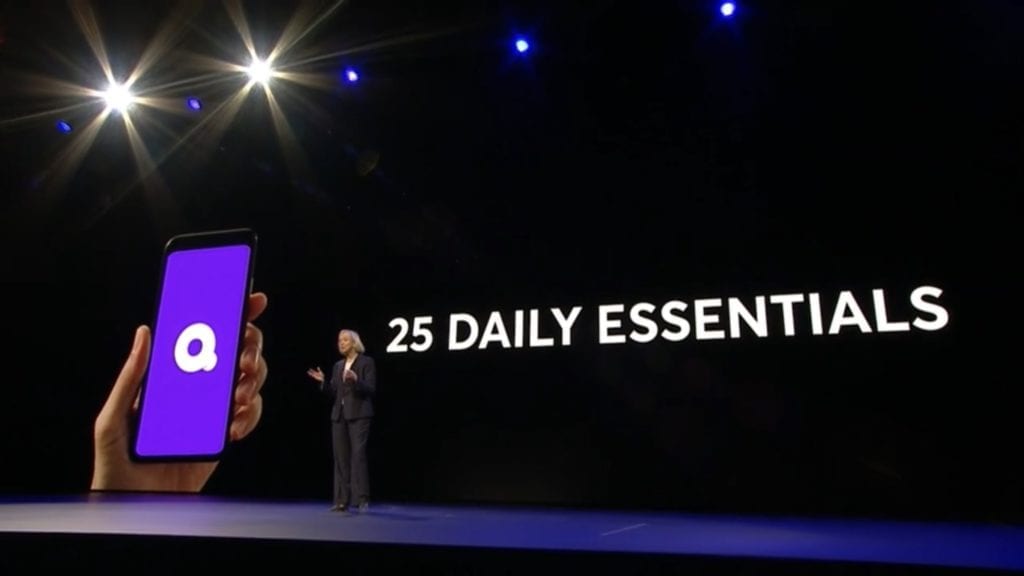
In all, Quibi said it will deliver 175 new original shows from well-known Hollywood talent. On a daily basis, Whitman said we can expect movies to deliver a new chapter each day. Episodic content, e.g., TV shows, will have five episodes per day. And Daily Essentials, such as news and weather, will include 25 clips daily. In total, Whitman said that totals around 3 hours of new daily content. What ultimately reached scale was the catalog’s second life: Roku acquired Quibi’s library in early 2021 and launched more than 75 series as Roku Originals in May 2021; Roku reported that debut set a new streaming record for The Roku Channel, which continues to be a growth vector in Roku’s platform business (THR; Variety; The Verge; Roku Investor Update).
The platform launches on April 6 for $4.99 with ads and $7.99 without. So we’ll have to wait a bit to see if Quibi’s mobile-focused approach will take off with consumers, but the behind-the-scenes tech is fascinating and we’re looking forward to seeing how content creators leverage these new tools.
In reality, Quibi shut down in October 2020 (The Verge). Roku purchased the library in January 2021 and re‑released the shows as Roku Originals starting in May 2021 (THR; Variety). By 2025, the competitive field favors scale and hybrid monetization: streaming holds ~40% share of U.S. TV usage (Nielsen), and leading services emphasize ad tiers and bundles—Netflix reported 40M monthly active users on its ad plan, with ads accounting for over 40% of new sign‑ups in ad markets (Netflix). Quibi’s orientation‑aware instincts foreshadowed today’s vertical feeds and alternate mobile streams, but the market ultimately validated free, ad‑supported discovery and cross‑device viewing over a paywalled, phone‑only model.